



Imagine if archaeologists dig up a typical American home a thousand years from now. They find a single chair at the kitchen table. Their conclusion: Americans stopped having families. The explorers took the chair home to illustrate America’s decline.
Or imagine if they excavate a school and find nothing but petrified laptop computers and smartphones, not chalkboards and playgrounds. It appears Americans stopped playing outside. The explorers lug the technology back to display to their own friends and family.

And imagine if explorers stumble on the remains of Washington, D.C., but there’s no Lincoln Memorial or Washington Monument. All that’s left is row after row of soulless modernist concrete offices—the kind of filing-cabinet-buildings that took over the city starting in the 1960s. The explorers pick them apart and bring back a load of cinderblocks.
Sound crazy? Not really. We know this issue is all about America’s birthday, but what we’re describing is basically what our former British overlords did in the 19th Century.

Back then, it was all the rage in the aristocracy to have what they called a “ruin garden.” Patricians would devote a part of their estate to Roman monuments. Sometimes, the ruins were actual ruins—the remains of ancient statues and structures unearthed in England or bought somewhere else in Europe. Other times, the ruins were fake, manufactured to give the appearance of Roman times and tastes.
Either way, the ruin gardens evoked and celebrated one of the greatest empires in human history. The not-so-subtle implication was that the British Empire was the Roman Empire’s rightful heir.
Which got us thinking: What would a future aristocrat, from some wildly advanced culture, put in a “ruin garden” dedicated to America? (This isn’t to say America is in decline—this is just a fun thought experiment).

We hope a future patrician would discover ruins that speak to American ideals and American identity. They’d find things worth celebrating—and things worth emulating.
A piece of the Statue of Liberty could easily wind up in the garden. Maybe her torch, all 305 feet tall. Few symbols are more illustrative of how America has been a light to the world. We’ve burned bright with the promise of freedom and equality—a promise that didn’t exist in the world until America came along. Even as government has grown and liberty has declined, that promise remains at the heart of our national creed.
Maybe, in some corner of the ruin garden, there would be a fossilized newspaper printing press. More than any other country on earth, the American public has relied on the media to hold politicians accountable and shape a culture of vigorous yet respectful debate. No doubt, the media has declined in recent years, promoting ideology more than accountability. But the ruined printing press would still speak to a powerful part of the American story.
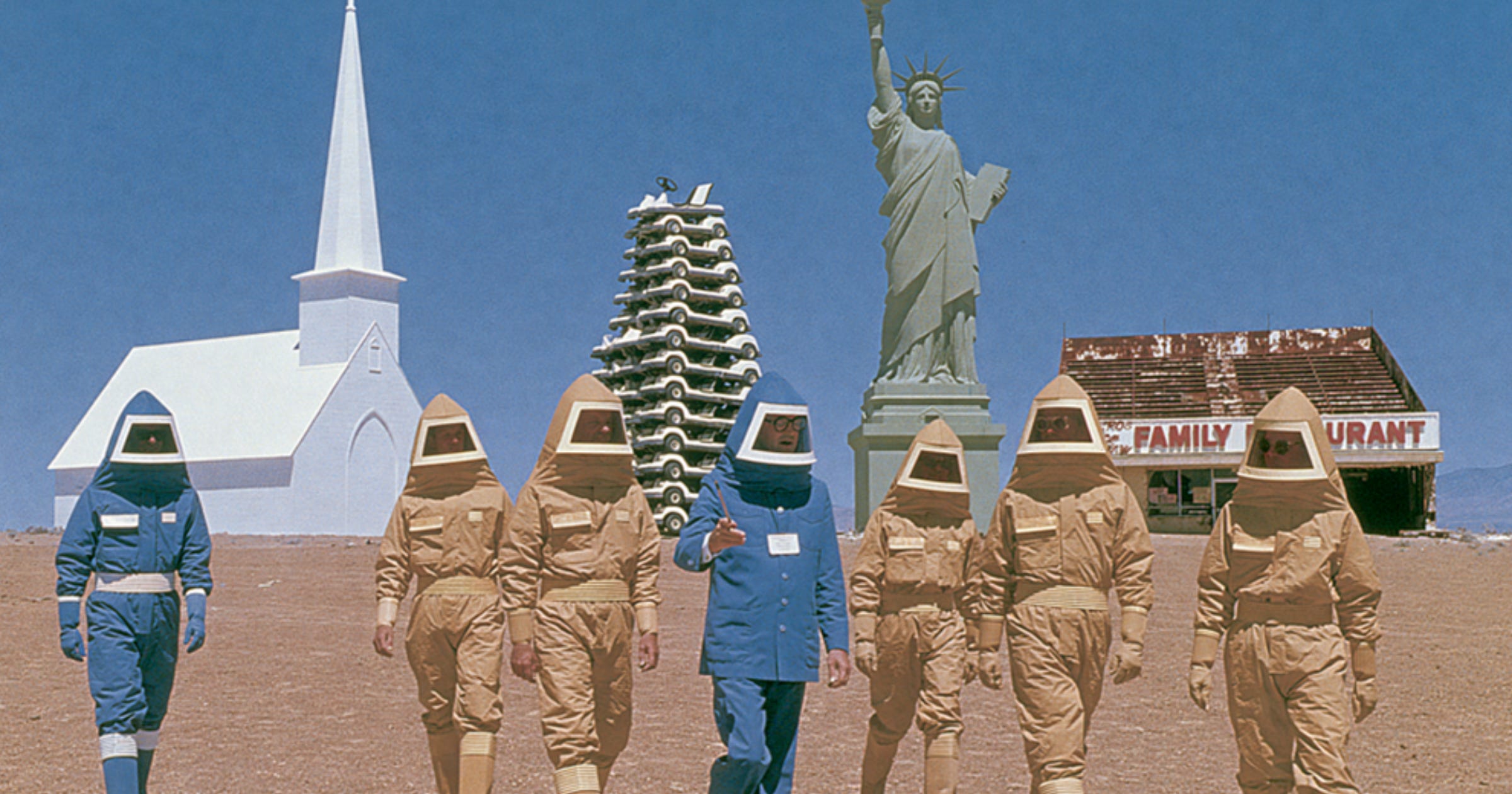
If this ruin garden had actual ruins, excavated from some long-forgotten American town, it would surely have a Christian cross. Maybe it was the old steeple of a local church. Maybe it graced the entryway to a graveyard. Regardless, the cross would speak to religion’s indelible mark on American society. The Christian faith—in all its many forms—has pushed our culture toward self-restraint and strong families. Such religious influence is also declining, which is both a shame and a danger.
Actually, the decline of these things—respect for liberty, an effective media, and religion in the public square—could affect what appears in the ruin garden. The tides of socialism and secularism could wash away the things that make America great. If we allow that to happen, a future civilization may find only the remains of a lesser culture. There would be nothing left of the America we know and love—an America that’s powerful and principled.
Instead, you’d get the sad scenes those explorers discovered at the start of this story. The empty kitchen. The playground-less school. The cinderblocks instead of marble masterpieces.

No American should want a ruin garden to memorialize such things. To the contrary: We should want a future civilization to stand in awe of what they discover. The objects that endure should speak to our patriotism, our principles, and our enduring commitment to family, faith, and freedom.
Then again, if we stand for these things, then America will never fall into ruin. That should be our goal as we celebrate the country’s 250th birthday: To stand by and for the ideals that gave America life and can keep America ever young and strong.
