


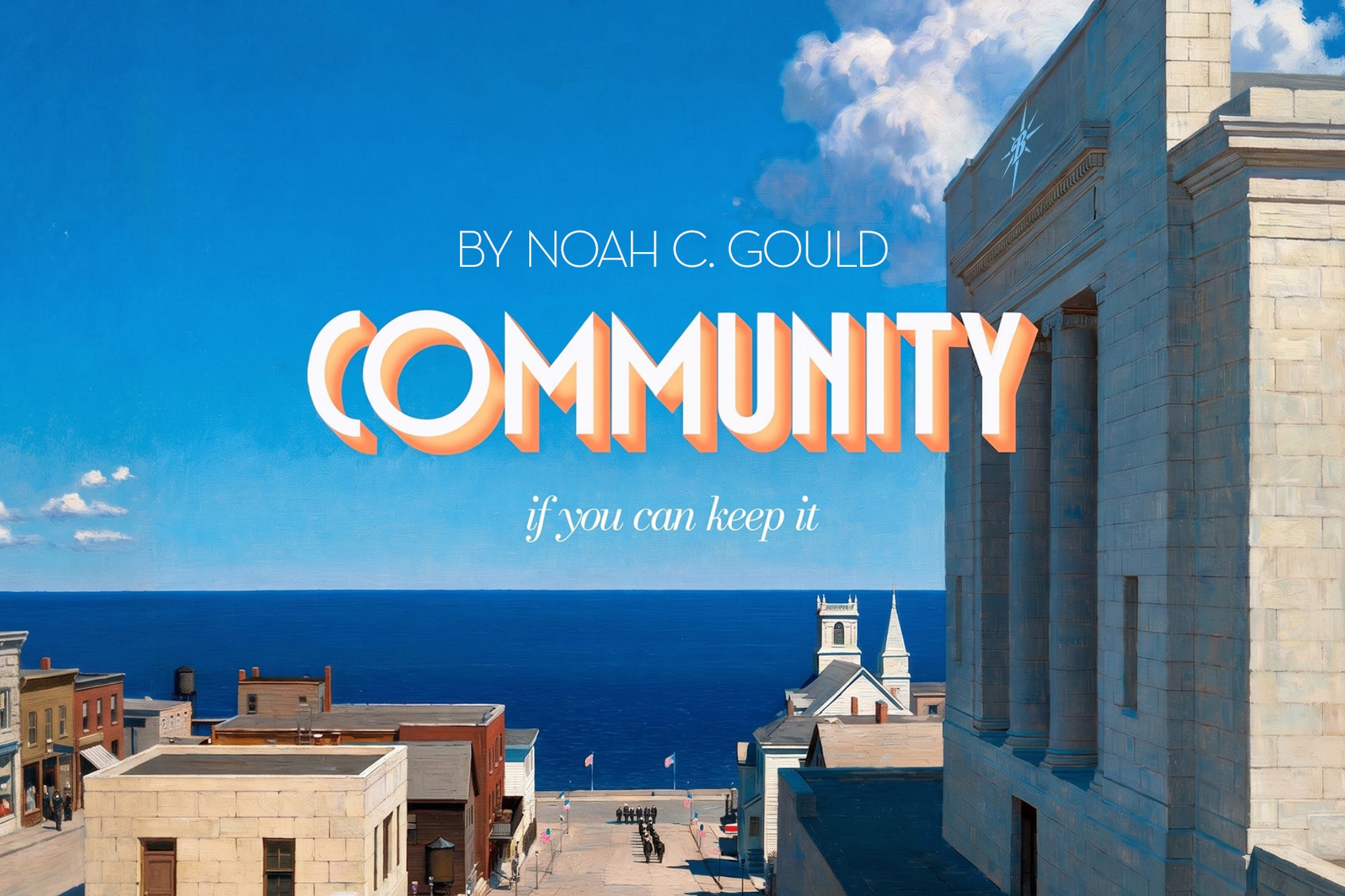
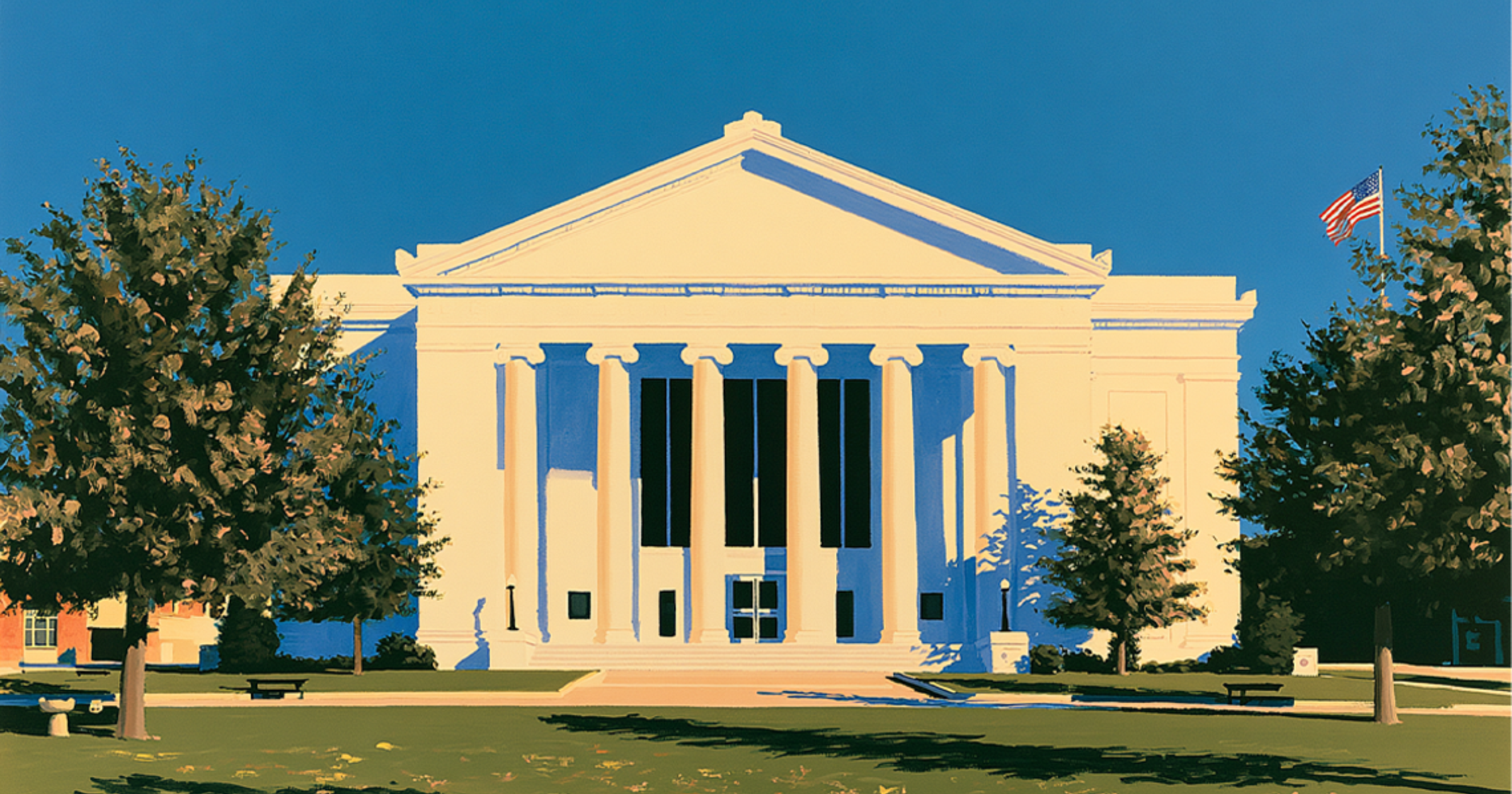
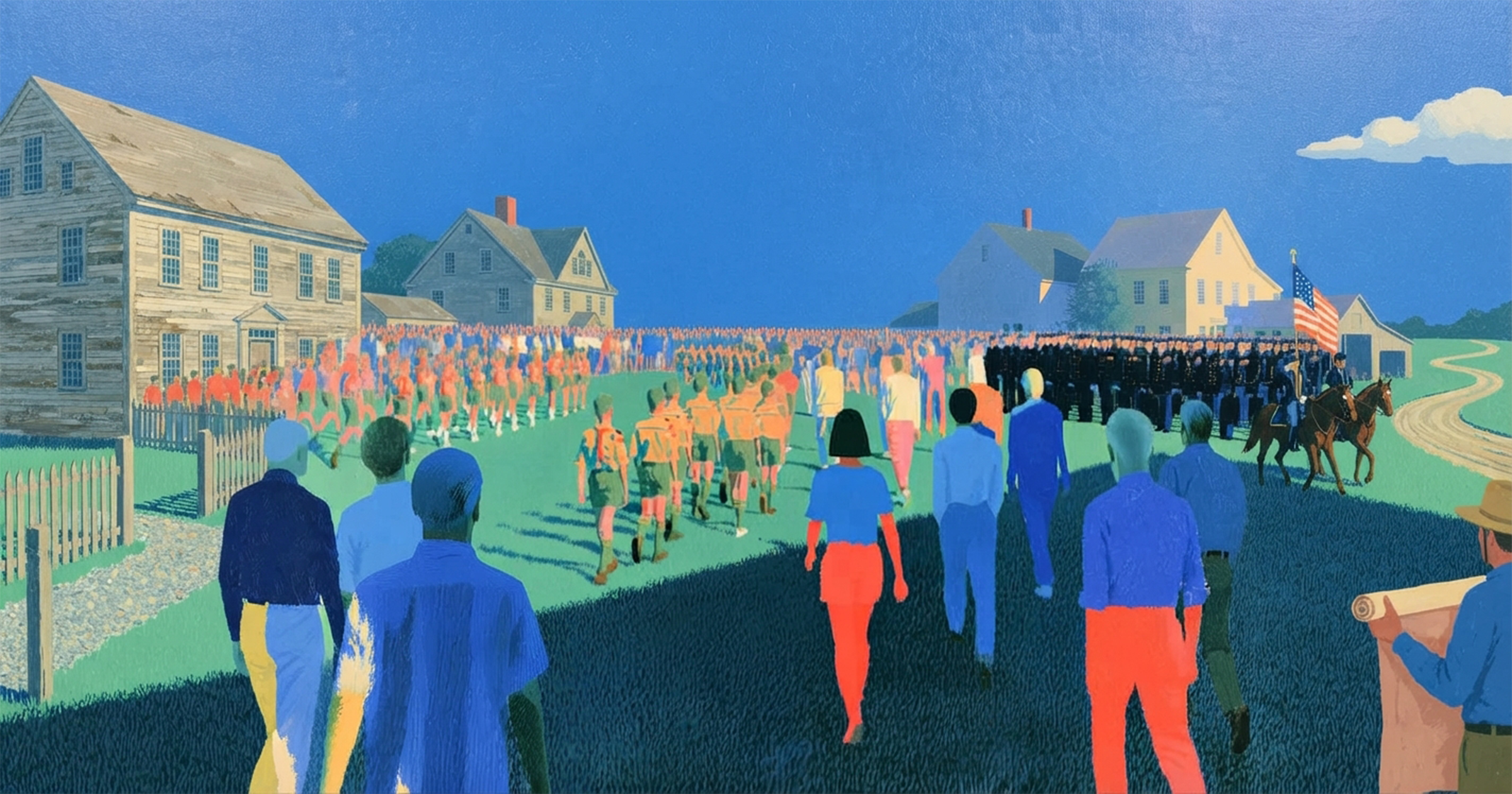
On Memorial Day in Granby, Massachusetts, near the former town hall and fire station, people line up. The Boy Scouts, Girl Scouts, American Legion, and others march down the town common to the Old Public Library, a Carnegie-funded neoclassical building painted white, and lay a wreath near a veteran’s memorial. Then they walk to the West Street Cemetery. At each stop, a state representative, a local pastor, a priest, or veterans’ group representative offers a prayer or a short reflection. These simple scenes are reenacted year after year in the small town where I was raised.
Before we sell America, we need to identify exactly what we are selling. A current debate on American history goes something like this: Is the true America a set of abstract ideals such as freedom, democracy, and equality, or a specific people, place, and history that together form a distinct culture? The Memorial Day parade provides a concrete both/and answer to this question. Yes, these citizens are celebrating a broad set of American ideals, recognizing that the freedom we now enjoy is a product of sacrifices over many years. But they celebrate those ideals in a specific place, with specific people who have lived through specific events. The general is honored through the particular; the ideals essential to the American experiment are best borne out through the concrete institutions of American life.
But that particular form of patriotism is at risk.
As we reflect on the 250th anniversary of our independence, we feel a sense of unease at the state of the American project. Our political slogans reflect it. Both Obama’s “Change We Can Believe In”, and Trump’s “Make America Great Again” register dissatisfaction with the current state of affairs; the rejoinder, “America Was Never Great”, displays an even deeper mistrust of the American experiment itself. The same impulse shows up, on both right and left, in the constant insistence that we should copy European models. We are experiencing a great loss of imagination; we cannot envision the relevance our American ideals might have on the problems of today.
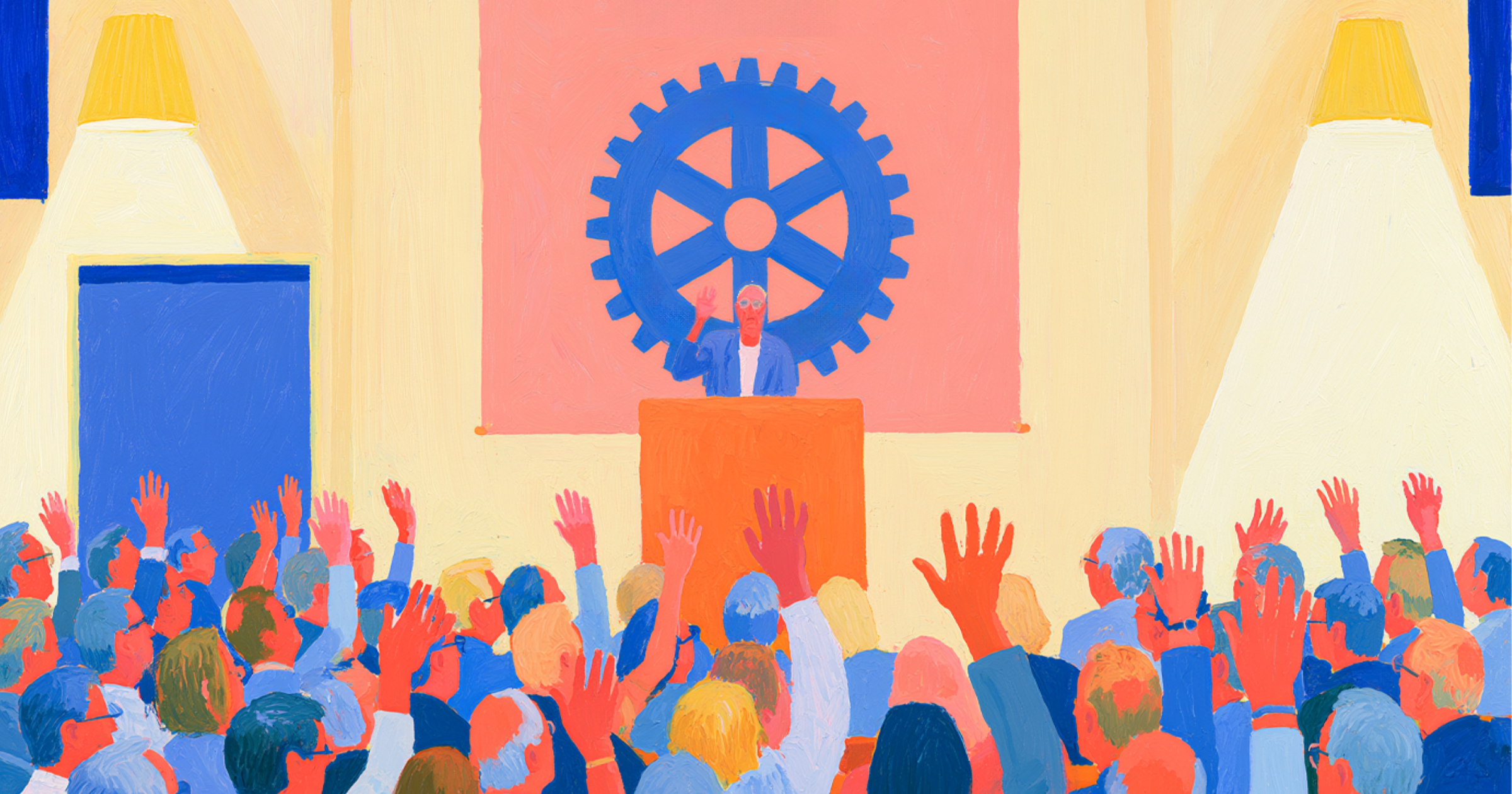
The patriotism we need is most properly expressed through local pride. And such local pride is the result of trusted institutions that provide the backbone of community life. These institutions include families, churches, and the many clubs and free associations that have famously dotted the landscape of American cities and towns. But associative pride, whether in the Elks, Lions, or Rotary Club, now seems quaint, relevant only to a bygone age of old boys’ clubs and tasseled Shriners. Still, the health of our body politic rests in the health of our thousands of local cities and towns.
To defend American ideals in the abstract requires us to show what they actually look like in practice. If the skeptic saw community institutions at work, his loss of faith would dissipate. We must rediscover the ethos of the American builder. The rich fabric of American institutions that we take for granted had to be built at some point, often at great personal sacrifice and always to address a specific problem. Alexis de Tocqueville, the great French chronicler of American life, drew insights from over 7,000 miles of travel and observed that whenever Americans face a problem, they form an association to solve it.
That observation could be true once more.
Those who build must acknowledge that the problems we face today are different than those faced by the builders of the 19th and 20th century, which resulted in many of the blue-chip associations that have been most prominent in our civic life. The problems of today include erosion of family units, technological change, mental and psychological illness, homelessness, political violence, and the list could go on.
New forms of association must address those problems to revive the American ideal. Merely strengthening community for its own sake or other vague notions of the good of community will fall short. Although belonging is a good in and of itself, it alone cannot sustain the type of long-term investment which must establish and sustain institutions.
Early signs of a rise in religious interest show the appetite for change, but they do not show where that interest will be channeled. They will just as likely flow toward a vague spiritualism as traditional organized religion. Churches must embrace exactly what makes them unique among voluntary associations. They cannot become glorified community gathering spaces or forums to air political grievances. Congregations which are growing share a common commitment to historic doctrines which have defined the faith over centuries. In the religious landscape, building anew requires embracing the old.
Like the parade that makes its way through town each year, the answers may be simple. If we could recover a clear picture of what we are working towards and see concretely what those plans look like in action, we would see a shift in our trust in the American project. But it will require those who are willing to build.
Noah C. Gould is the Alumni & Student Programs Manager at the Acton Institute and a Contributor at Young Voices. His work has appeared in outlets such as The Wall Street Journal, National Review, Law & Liberty, and The Washington Free Beacon. He is a graduate of Grove City College. Follow him on X @NoahCGould1

.
