


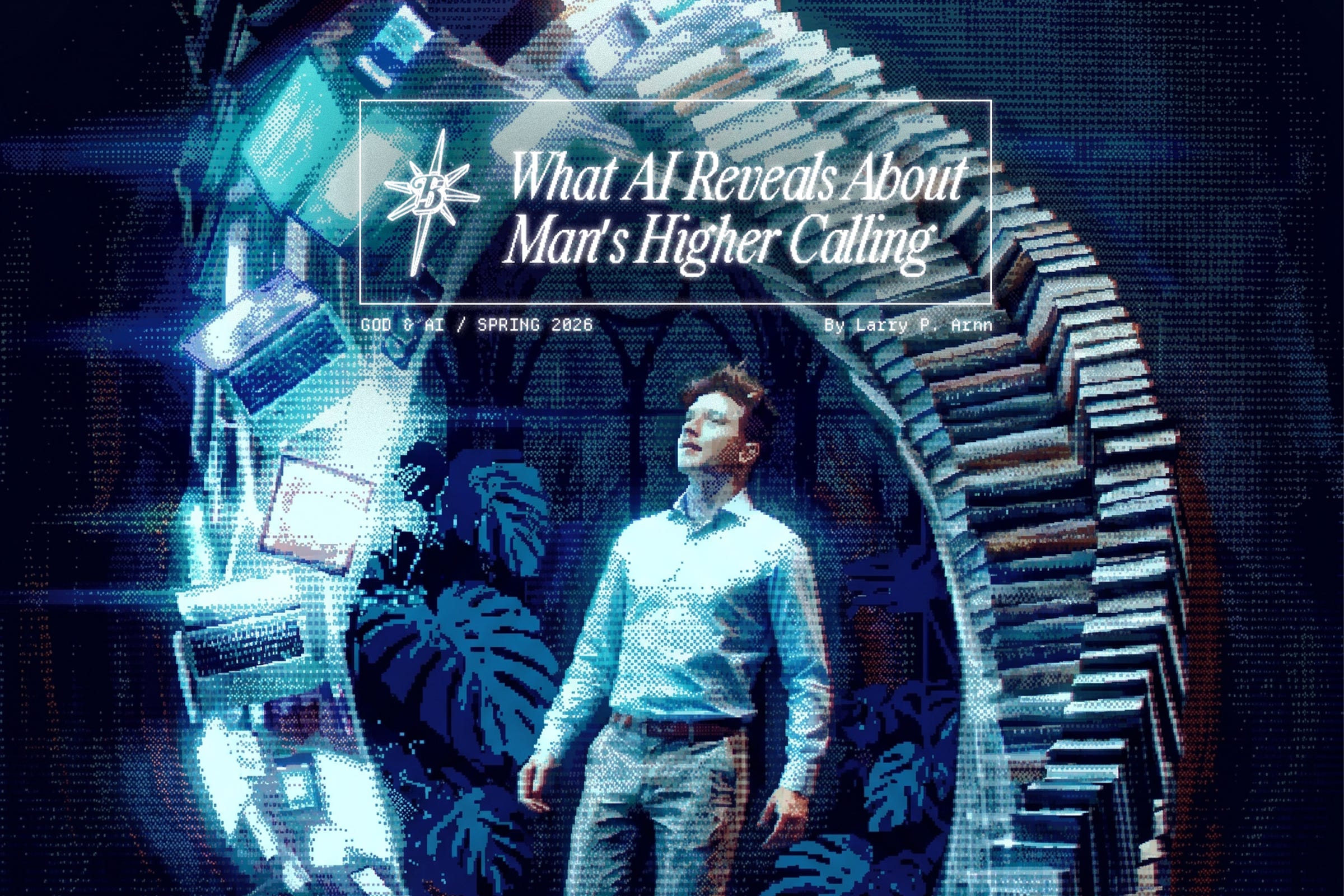
Artificial intelligence is promising and threatening to reorder American life. Social media has already been doing that for a decade, mostly by training the attention and habits of its users. AI sharpens this problem, because, for the first time, we have made something that seems terribly like us: AI can talk, and talking is a distinctly human act.
Because AI can talk, it can also write; the two are the same faculty. This begs a tempting question: ought we outsource writing to machines? To do so would be to outsource thinking. What would that mean? What of learning? And what of college?
If students use AI to read their books and write their papers, they will cease to do the work of college. What a tragedy this would be. AI is not enriched by traversing the rhymes of Milton, nor is it strengthened by grappling with the Founders’ ideas of justice. Certainly, it can do those things; it can parse and summarize; it can draft and compose. But it is not made better by them. For us, the learning is in the work. And while the machine can do the work, it cannot learn for us.

Man and AI are different, made by different authors for different ends. We are God’s creatures, made for happiness and heaven. AI, on the other hand, is man’s creature, made to serve our good.
The purpose of education is to cultivate the powers proper to a rational and moral creature. That cannot happen without work. These are not external burdens laid upon education; they are the substance of it. In the course of working through a difficult problem, the student acquires not only knowledge, but discipline. He rises, through toil and weariness, through struggle and suffering, toward self-government. If he chooses the better and the harder over the easier and the worse, he rises. If he does not, he declines. AI does not face this challenge.
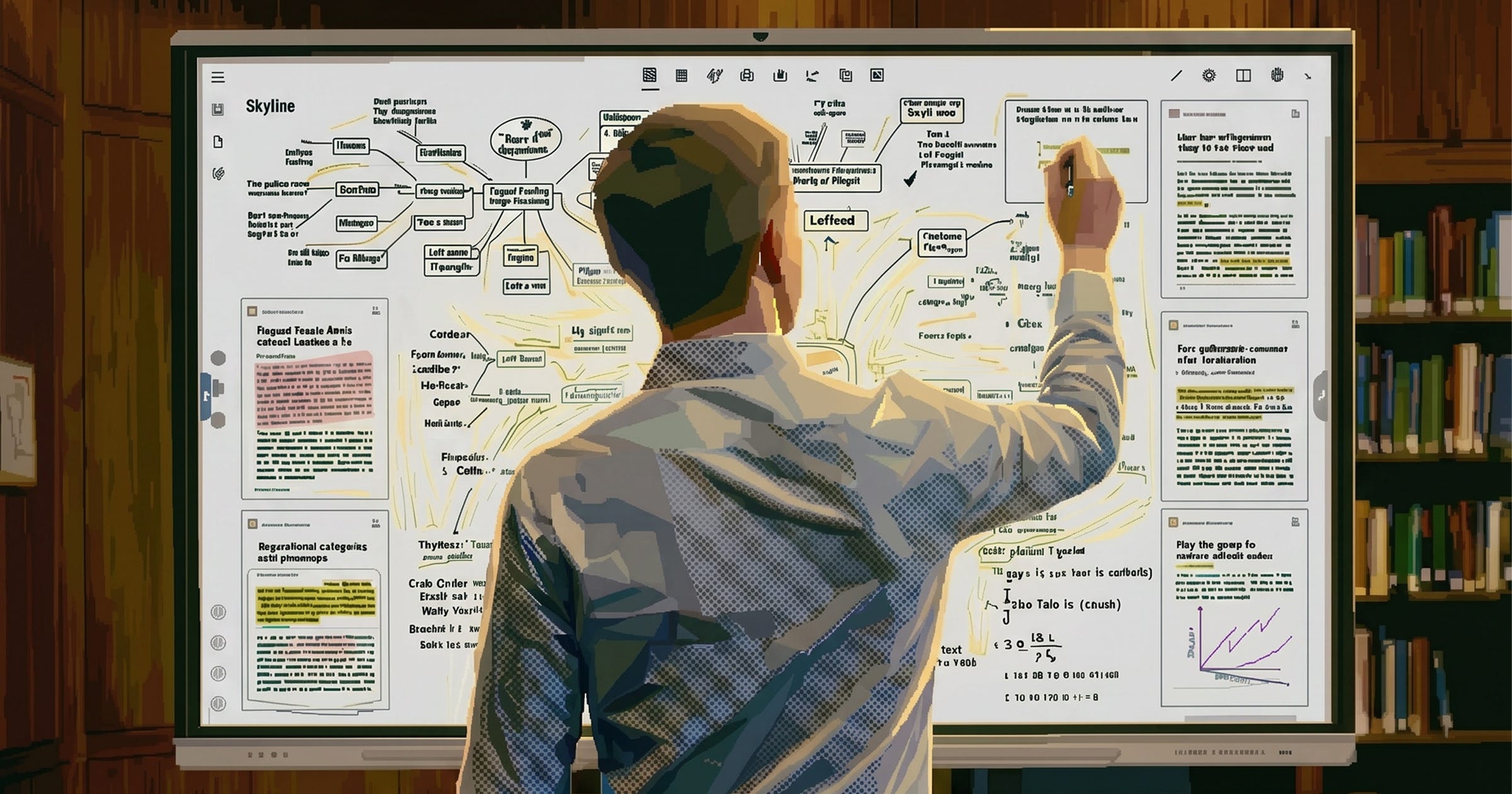
If a machine performs these acts in place of a student, then whatever convenience is gained, the student himself is diminished. The thought may appear on the page, but it has not been thought by him. And that is the point.
So, the question is not finally what artificial intelligence can do. The question is what man is. If man is simply a factor of production, then perhaps the machine may improve him by relieving him of his labor. But if man is a being made for higher things, then no machine can relieve him of the necessity of becoming what he is meant to be. That work cannot be delegated.
Therefore, we should use such artificial intelligence carefully, soberly, and always as a subordinate thing. Let the machine remain the servant. Let it never be mistaken for a teacher, much less for a soul.
Larry P. Arnn is the twelfth president of Hillsdale College, holding degrees from Arkansas State University and Claremont Graduate School, and previously leading the Claremont Institute while working with Sir Martin Gilbert, biographer of Winston Churchill. He has been active in public policy and civic leadership, including chairing Donald Trump’s 1776 Commission, serving on several major boards, and receiving multiple national awards.

