


Every generation of Christians has had to ask the same question in a new way: What do we do when the world changes? Do we resist, or do we adapt?
Today, that question arrives with a new controversy: artificial intelligence.
AI now writes essays, translates languages, curates our news feeds, generates “art,” and answers deeply personal questions in the quiet hours of the night. Understandably, this raises concern for people of faith.
How do we reconcile this new technology with Christianity? I believe the answer is neither fear nor blind enthusiasm, but discernment rooted in hope.

How Has Technology Shaped the Church?
The Church has always adopted emerging technologies—sometimes slowly, sometimes imperfectly, but often fruitfully. The apostle Paul used the cutting-edge communication technology of his day—letters carried along Roman roads—to disciple churches he never physically visited. The printing press fueled the Reformation by putting Scripture into the hands of millions of ordinary people. Radio, television, and the internet have each expanded the reach of the Gospel in unprecedented ways.
AI is simply the next chapter in that story.
The Danger of Disembodied Faith
We must be honest about this challenge. AI raises serious questions about truth, authorship, dignity, and identity. In a world where machines can mimic human language and creativity, the Church must insist—more clearly than ever—that people are not reducible to data or utility.
We are made in the image of God, not in the image of tools. And our value does not lie in our efficiency or productivity. Rather, our human dignity comes from our createdness by a loving God, a master artisan. And the beauty of our redemption story doesn’t come from automated perfection, but in the humility and vulnerability of admitting we are essentially flawed and in need of a Savior.
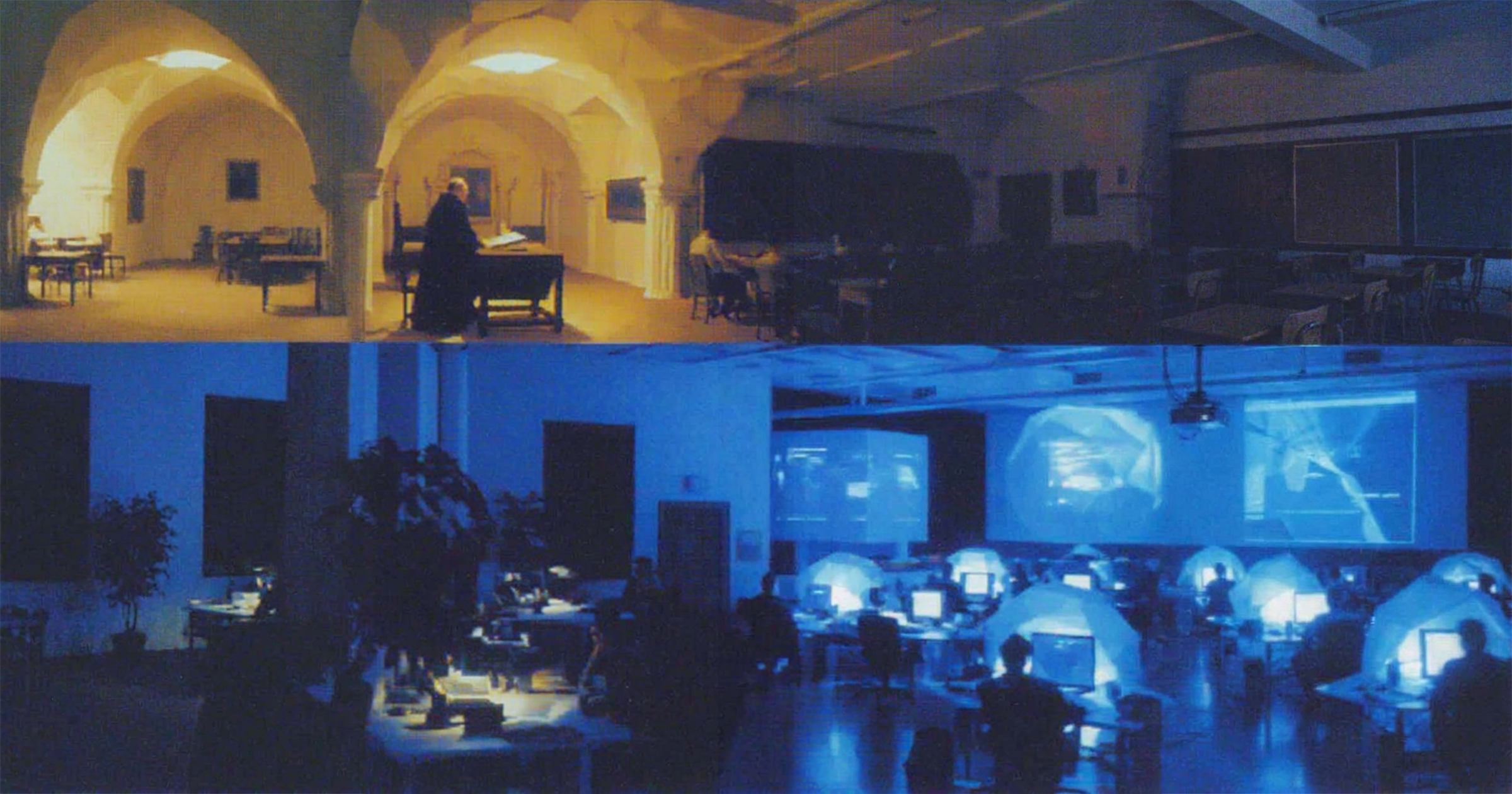
There is also the danger of disembodied faith—consuming spiritual content without accountability, community, or transformation. Christianity is not a download. It is a way of life, learned together, practiced in love, and embodied through the Church. The digital world can point people toward Jesus—but it cannot replace the table, the baptismal waters, the laying on of hands, or the slow work of becoming like Christ in a community of people who challenge our nerves and call us to practice loving our neighbor as ourselves.
Our Moment of Opportunity
I am convinced we are standing before a critical opportunity. AI will shape how people learn, work, and search for meaning. The Church can either retreat from this space—or enter it wisely, prayerfully, and courageously. We can insist on truth in a world of simulation, dignity in a world of automation, and hope in a world aching for meaning.
Used well, technology can amplify the Church’s witness. Used poorly, it can empty it of meaning. The difference will not be found in the sophistication of our tools, but in our willingness to spend time well, disciple deeply, and choose love consistently.
At Palau, the ministry I lead, we are seeing firsthand how digital tools—including AI—can serve the Great Commission. Every day, people around the world are searching online for answers to deeply human questions: Why am I here? Is there hope after failure? Does God see me? Increasingly, AI-driven systems help us meet people at those moments—guiding seekers toward Gospel-centered content, connecting them to local churches, and supporting them through their earliest steps of discipleship. We are also using AI driven language modeling and translation technologies to make Scripture, testimonies, and discipleship resources available in languages we could never reach at scale before.
For all its power, AI cannot do one essential thing. It cannot testify. It cannot say, “I was lost, and now I’m found.” It cannot say, “God met me in my darkest moment.” (Well, it can say it, but it can’t mean it.)
This is why we are intentionally shifting our digital evangelism strategy toward storytelling. In a world overwhelmed by information, stories are the secret sauce that cuts through the noise. Jesus knew this. He didn’t distribute bullet points—He told parables. Stories connect and disarm us. They invite empathy. They open the heart before they challenge the mind.

God has always used ordinary people, empowered by His Spirit, to tell an extraordinary story of redemption. The same is true today. The tools have changed—but the mission has not.
And in an age of artificial intelligence, God’s mission can move forward faster and farther than ever before, but let’s also make sure it stays beautifully, stubbornly, human.
Kevin Palau is the President and CEO of Palau, a ministry pioneering new approaches to global evangelism. His book, Unlikely: Setting Aside Our Differences to Live Out the Gospel, chronicles the ongoing impact of Palau’s mission.

