



Are America’s problems too big for us to solve together?
As we mark America’s 250th anniversary, more than half of all Americans say the answer is yes. Having turned away from each other as the source of solutions, people are turning to extreme top-down ideas — from socialism to protectionism. But these ideas violate the principles that inspired our country’s founding. And they’ve always failed to deliver.
While the rhetoric rages on X, Americans know that talk is cheap. It’s the actions we take to tackle the problems that cause people to look to the extremes that will determine the future of our country. From AI’s economic disruption to affordability. From the crisis of loneliness to political polarization that causes more than 1 in 5 Americans to say violence is justified when we disagree.

To get the future right, we’d do well to look to our past. At the turn of the 20th century, Americans were also bitterly divided. The Industrial Revolution uprooted community life, and millions of agricultural jobs disappeared overnight. Fearmongers demonized immigrants. Cities elected socialist mayors. The People’s Party frothed with populist fervor. Anarchist bombings brought political violence. There was even a pandemic. The Spanish flu killed far more people than Covid, shaking trust in science and the government.
Communism and fascism captured imaginations elsewhere. But Americans didn’t succumb to the siren song of top-down ideas to solve their problems. They doubled down on the principles in the Declaration. The result? Instead of letting the chaos consume them, they created the American Century.
They did it by reinventing the institutions that enable a uniquely American ideal: Out of many, one.

And they did it from the bottom up. A striking number of the local groups that are now household names were formed at this time: the Boy Scouts. The Rotary, Lions, and Kiwanis clubs. The NAACP and the “Divine Nine” Black fraternities and sororities. It was Tocqueville for the 20th century: Americans uniting to solve each other’s problems. Before it was over, civic participation had nearly tripled.
This explosion in civic participation reimagined the institutions that shaped American life and defined what it meant to be an American for the next 100 years. It showed people that their actions mattered, and that they were part of something bigger. It gave new life to the Pursuit of Happiness: the idea that we succeed by helping each other succeed. Our country’s problems didn’t go away, but we built the muscle to tackle them.
Our next overhaul is overdue. Today, 20th-century institutions are no longer cutting it. It’s not just government. Businesses are struggling to help workers keep up. Our education system is failing to prepare students for the 21st century. And despite spending trillions of dollars, poverty is even harder to escape.

The good news is that Americans are up to the task. When asked about their highest aspirations, more than 70% say their top priority is contributing to the lives of others. But barely 30% say they’re achieving that. An unmet demand that big is an entrepreneur’s dream. And social entrepreneurs finding new and better ways to solve problems are the bright spots in an otherwise dim landscape. Given the appropriate oxygen, their glow could grow into the institutional framework for the next American Century.
One-size-fits-all education is giving way to entrepreneurs like MacKenzie Price and Joe Liemandt, cofounders of Alpha School. Their students perform twice as well as the best traditional school students in less than half the time. Alpha uses the same AI disrupting today’s workers to prepare tomorrow’s for whatever might come. The VELA Education Fund, active in all 50 states, has provided funding for nearly 5,000 other education entrepreneurs who are meeting the unique needs of 5 million kids.
Social innovators like CarePortal promise to replace broken social welfare programs. They connect churchgoers to families at risk of losing their kids to the foster care system. The group’s technology doesn’t replace human relationships. It accelerates them to keep those families together. The 400,000 kids they’ve helped are far more likely to avoid poverty, prison time, and other tragic consequences of foster care.
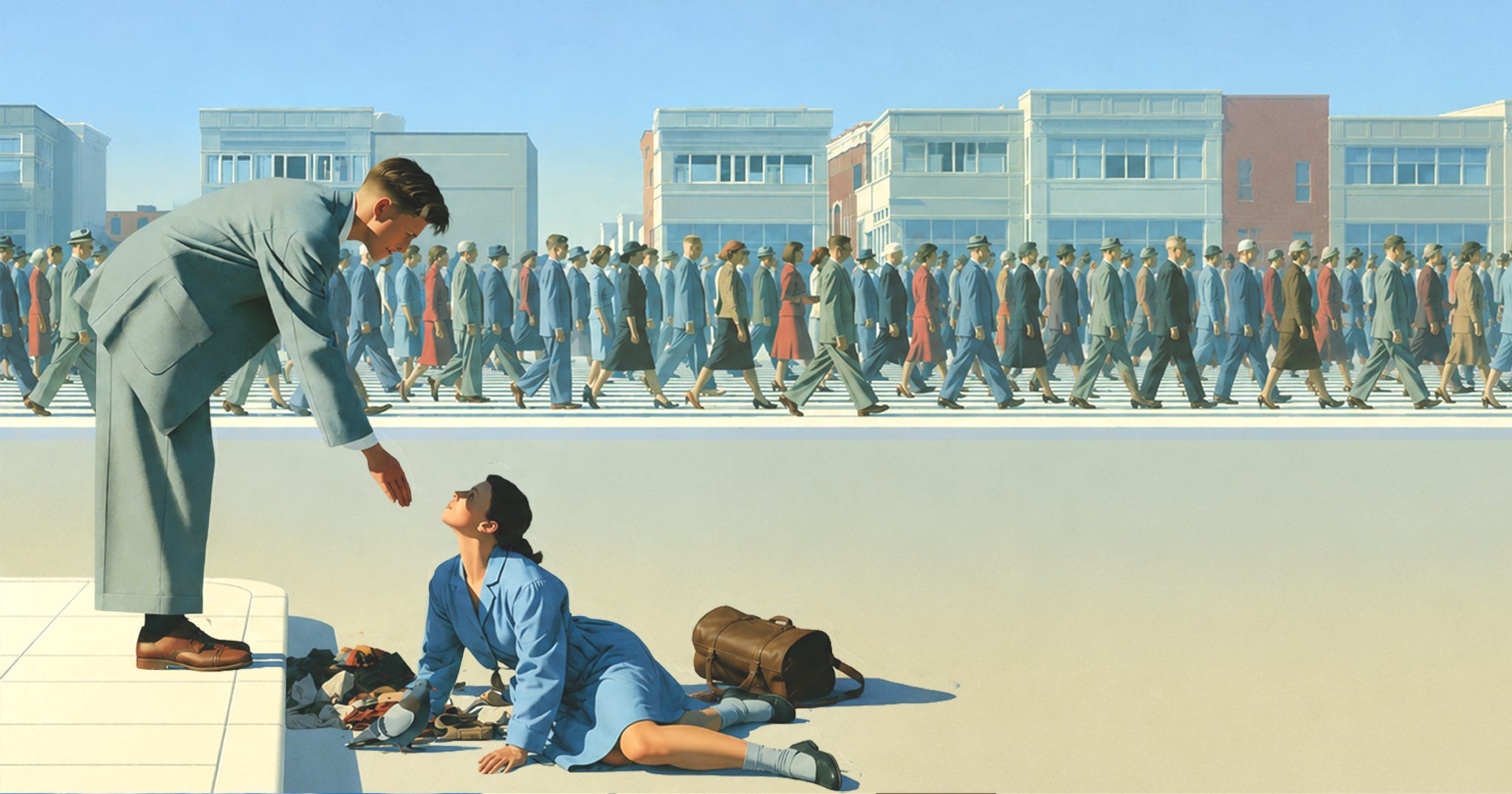
Businesses are beginning to transform hiring practices, no longer requiring four-year degrees. The Human Potential Network is a coalition that helps businesses adopt the practice. And if this becomes the norm, they’ll help unlock the potential in more than 90 million Americans who don’t have degrees but do have a lot to offer.
These are just a few of the thousands of innovations that can help shape institutions to better meet the challenges and opportunities of the 21st century — institutions that empower Americans to solve problems by applying those founding principles we’ll celebrate this summer. As they do, people are less likely to embrace extreme ideas and more likely to begin to build the future together.
Brian Hooks is chairman and CEO of Stand Together. He is co-author, with Charles Koch, of the America’s 250th anniversary edition of “Believe in People: Bottom-Up Solutions for a Top-Down World.”

