


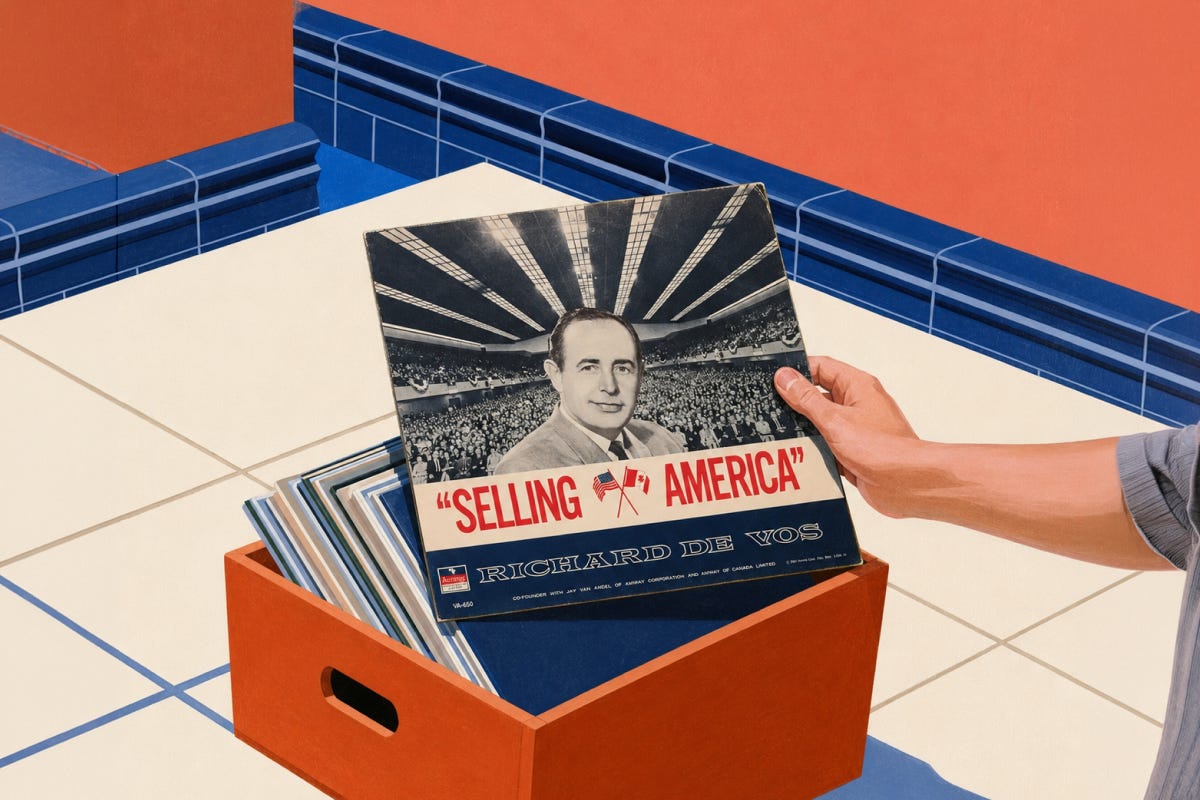
What follows is a transcript of “Selling America” by Rich DeVos. Originally delivered in the 1960s, this landmark speech has since been reproduced and delivered thousands of times, earning the Alexander Hamilton Award for Economic Education and cementing Rich’s reputation as an in-demand speaker. As we enter America’s 250th year, we’re taking time to reflect on how the lessons of “Selling America” can apply to the present day; where they hold up, and where they can be modified or improved upon. This will be the theme of our Believe! Journal contributors’ new pieces in our upcoming issue: Selling America 250.
Fellow Achievers and fellow Americans, Canadian friends from the north, it’s an honor to be with you tonight to share a few thoughts about the great system that makes both of these countries the most prosperous on earth. Before, however, I build you up too much, because you see, you are the tops in Junior Achievement, you’re here because of what you’ve done, you’re proven achievers and performers, I would like to give you a little quiz. It goes like this: What I want to know is, before you go out to rebuild the world, have you learned how to clean up your bedroom? Is that a bad question? I don’t know.
We live in an age where the Junior Achievement organization and those of you who are gathered here stand contrary to what many people in this country believe. And as I wander, and as you wander, you find people who don’t believe that people should be rewarded in direct proportion to the effort they put forth. They think that all people should be treated equally, like in the socialistic or the communistic government. And that means that everybody should be equal. What they really mean to say, is that everybody should be equally poor, because that’s about where they stand.
But something happens in the minds of people, those who are not here, those who are roaming the streets tonight saying that America and the free enterprise system shared in this country and Canada is not available to them. They claim the American dream passed them by. But something happened in their attitude, that they were never exposed to find out how great this system really is.
And, so, it is exciting to be here. I have a couple of little one-liners, we call them, from people who have applied for welfare. And you’ve got to understand something of their attitude. So here’s a gal, and she writes to the welfare department, and she’s writing for her neighbor. She says, “Mrs. Jones has not had any clothes for a year and has been visited regularly by the clergy.” Now, the next lady writes, she says, “I cannot get sick pay. I have six children. Can you tell why?” And the next lady says, “This is my eighth child. What are you going to do about it?” Now, here’s a state of mind which says, “What are you going to do about my problem? What are you going to do to help me?” Implying here that there’s nothing she can do to help herself. And another lady says, “Unless I get my husband’s money, pretty soon I will be forced to lead an immortal life.” And apparently that’s her only out. Another one says, “You have changed my little boy to a girl. Will this make a difference?” I hope so. I really do.
Now this is an attitude, isn’t it, on the part of people blaming somebody else for their plight? I appreciate the efforts of government to solve people’s poverty problem, but I cannot tolerate their constant complaint that it’s somebody else’s problem that put them there. I believe enough in our system that I maintain anybody who wants to and is willing to put forth the effort can solve their own poverty problem. I think being poor is something many people do. It sort of has to do with being poor by choice. But you see, that doesn’t solve the problem, does it? Because somebody, somewhere, has got to reach that person or those persons, millions of them, because they don’t know. They don’t realize that it can change their life if they’ll but look at the opportunity in a new perspective.
But you see the thing we project, the attitude we show, has as much to do with it as anything. So, I want to talk to you about selling America, and I include the Canadians, because I maintain you are Americans because we all live on the North American continent and we share a common system. I, of course, welcome you and I recognize you’re Canadians and that we’ve taken words and say, “We’re Americans and you’re Canadians.” But we all work under the same concept, and that’s why the border goes unguarded, and that’s why we go back and forth so freely, because we have so much in common.
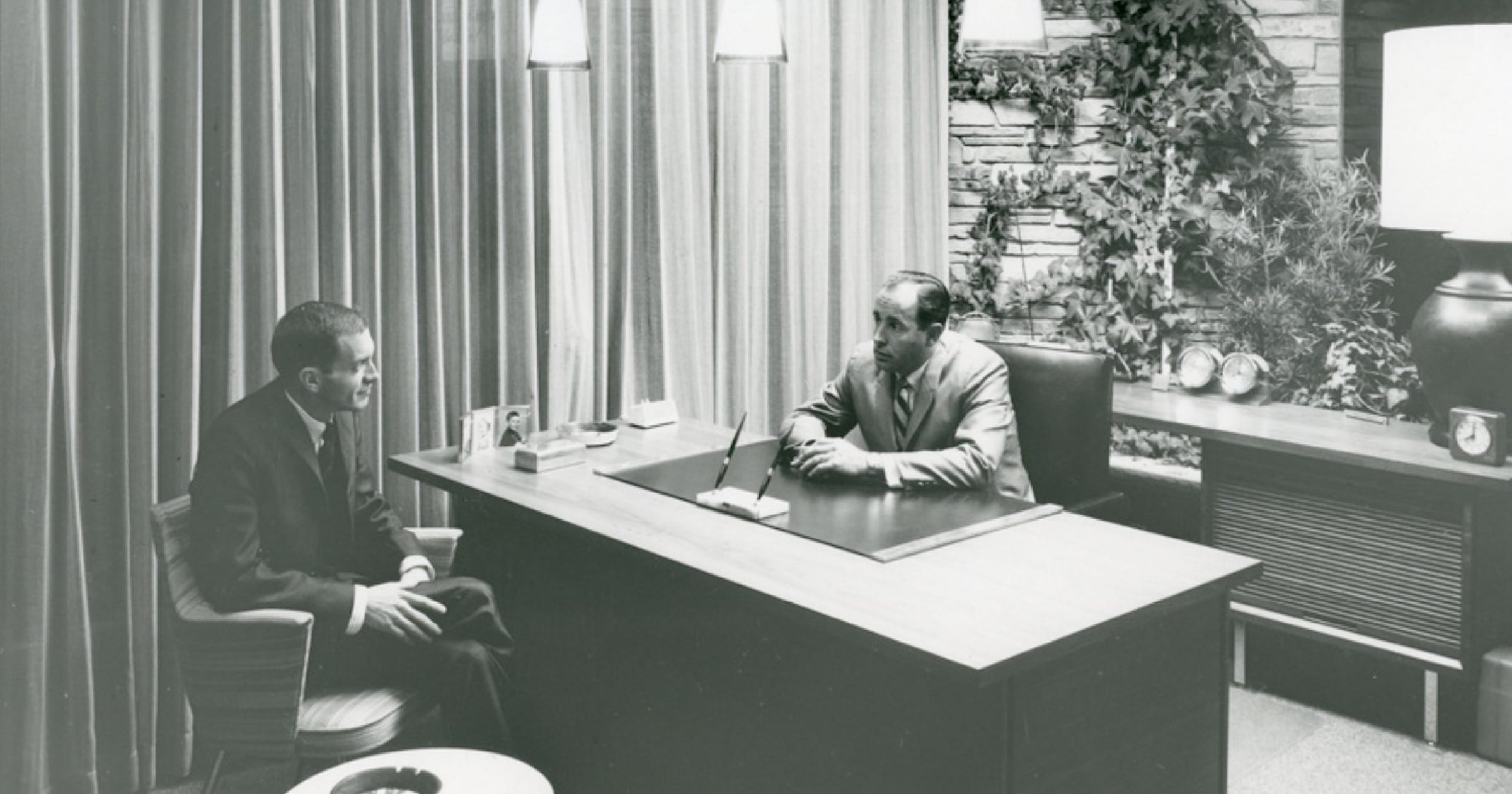
But when I ask you to sell America, I maintain it’s a part of a greater job. I want you to go out from this place to be successful. I want you to achieve. I want you to use the talents God has given, so you can make a contribution. I want you to assume roles of leadership, so you can take those people who don’t know that the opportunities are available to them and make them see the light. And maybe all they’re waiting for is a word from you. And sometimes that word is so simple. It goes like this, “Hey John, you can do it.” Maybe nobody’s ever told him that. You better think about that. My dad used to say that to me. I used to say, “Oh, I can’t do this. I can’t do that.” And he’d say, “You say can’t once more, and I’ll knock your block right through that wall.”
So, somebody kept saying to me, as somebody has said to you, “You can do it. You can do it. It does pay. You can get ahead.” But you see, those people never had it. Let me give you an example. In your school right now is some girl or some boy who doesn’t dress quite as well as you think he ought to. But you’ve got your own little clique going over there in the corner, haven’t you? So, this poor soul who maybe is dressing as best they can walks by, and somebody says, “Look at that.” You don’t have to say any more than that. They feel a little bad anyway that they can’t afford something better. But you see, in that moment, you help to destroy that person. Because you see, that little snicker might just have been the whole thing that broke that girl’s heart or that boy’s heart. But a friendly word from you could have changed that whole situation.
Some of you are decrying the fact that some kids in your school haven’t gone on and they’re dropping out and you haven’t stopped to wonder about the effect you had on the reason they dropped out. See, you’re the bright ones. You’re the leaders. You can afford some slop. So you skipped a day. But the problem was, when you skipped, you didn’t do it alone. You said, “Come on, John. Go with us for a day. We’re going to this lake to go swimming. Oh, we’ll skip today.” Well, when you came back, it was all right. You caught up in a hurry. So you took a grade down that day, it was all right. It didn’t matter to you.
But you know, to John, it might’ve just knocked the edge off it. Then he slipped just a little behind that day and he never quite caught up. And when the end of the semester came, he flunked the course. Not because he wasn’t the greatest, because he wasn’t that smart, but he was making it until you taught him a habit or took him away. He couldn’t afford that day. You could, but you undermined his whole future because you taught him a bad habit that day.
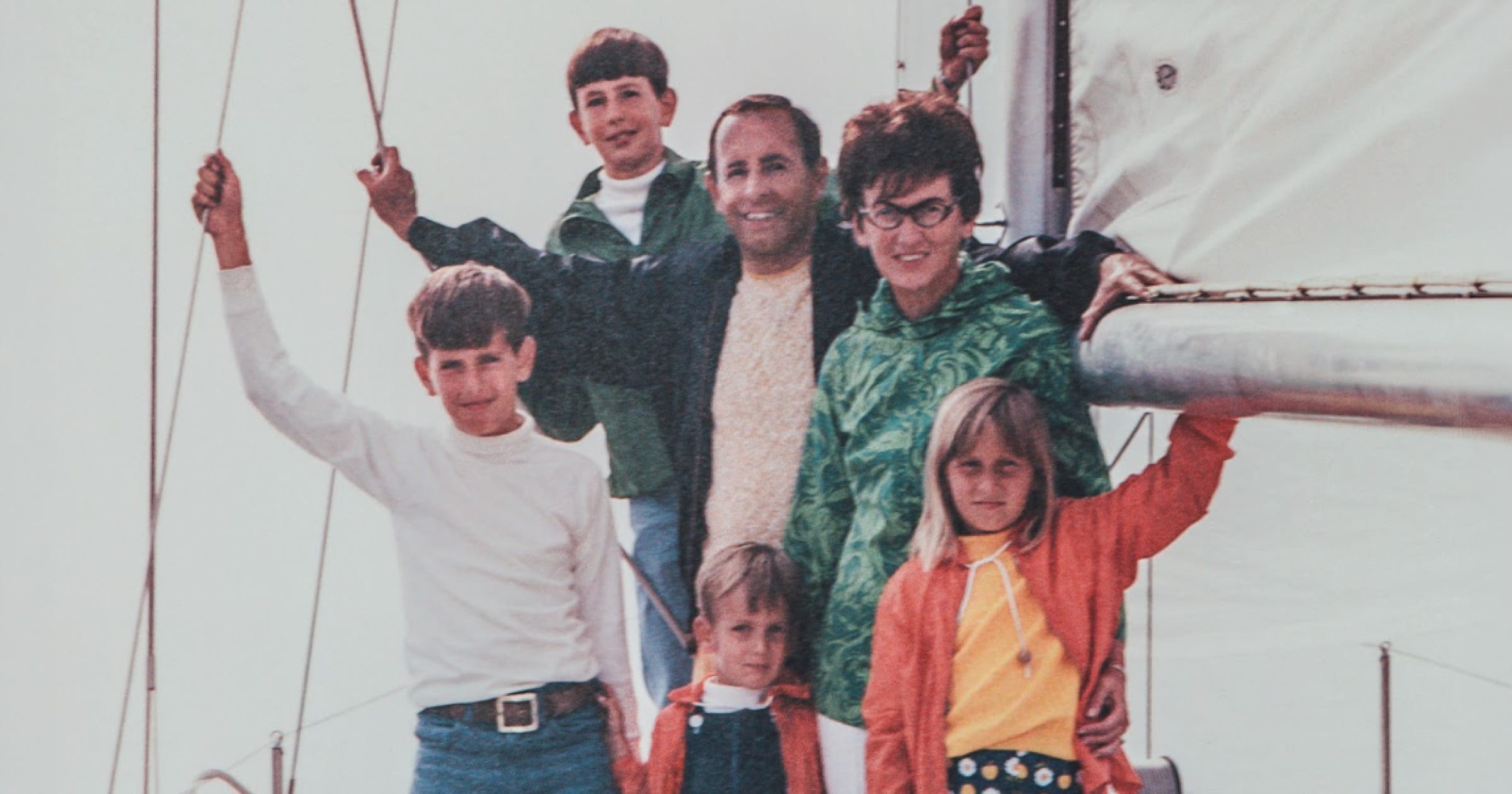
You see, the little things you do, folks, affect the lives of people every day. There’s no escaping the impact you have on others. And certainly, as the leaders in your community, you’re just not one of the gang. You’re one they point to, they look to, and every word of encouragement can change the lives of the others with whom you live. I gave a talk one day in a high school and I talked about smoking. I’d made some comments about the fact that it’s an interesting thing that when you’re your age, it’s real big shot stuff to smoke. And when you’re my age, you’re a big shot if you can quit. Now, that’s an interesting thing. But I made some implications that I didn’t approve of smoking. One young gal came up to me afterwards and she says, “I’ll have you know, I smoke.” I says, “You’re kidding.” She was a high schooler. She says, “No, I do.” I said, “I don’t believe you.” She says, “Really, I smoke.” “No,” I said, “You don’t smoke, honey. The cigarette smokes. You’re just the sucker. You got to remember that.”
I mentioned the fact that you’re the leader, you’re the comer, you’re the goer, you’re the achiever. And as such, others will follow you. But as you progress, and as you assume your roles of leadership and as you excel, I want you to remember something: One of the greatest problems we’ve got in America today, outside of the racial strife that’s going on and we all deplore, is the equal respect for each other. One of the things any minority group is seeking is, “Just respect me for what I am. Don’t give me any favors. I’m not asking for that.” Most of them aren’t asking for that. They’re just asking for equal respect and equal opportunity, and it’s all of us that are going to change that. That won’t happen by accident.
I see it happening between groups of people, between classes of people, as well as groups, and racial groups. And so the man said, “Well, I went to college.” Well, that’s all right. I hope you all go to college. I hope you all graduate. But you know, about half the kids coming out of school aren’t going to go to college. And although you may have a greater responsibility because you have greater talent, as a man or a woman, you’re not necessarily better than the one who didn’t. I want you to remember that. I want you to remember that the next time that fellow comes by who picks up the garbage at your house. He’s a fellow American who’s using his talent to do what he can do. He, too, is a part of the great mainstream of American life.

I had an interesting experience because I like garbagemen. You wouldn’t believe that, but I went up for four weeks in a row because I wanted to meet him. I said, “Hi, how are you this morning? Just came out to tell you, I appreciate your coming.” He looked at me and he says, “Are you just getting up or are you just coming in?” He wasn’t sure. I said, “No, really, I just came out to say, ‘Hello.’” I said, “I appreciate you coming by.” Now, if you don’t think you appreciate his coming by, you just let him skip you a couple of times, and you’ll find out how important he is in your life. About the fourth time I went out there, I said, “I’m just coming out to say, ‘Hello,’ again.” I said, “I really mean it. I appreciate your coming. Do you realize how important the work is that you do, what it does for the sanitation of this community, how it protects the health and welfare of all the people?” He says, “Well, I’ll be damned.”
Now, I don’t like to use that language, but I portrayed to you his attitude. He said, “I’ve been picking up garbage for years, man. Nobody ever told me that.” And I say to you, isn’t it too bad that a fellow American, who’s doing what he’s able to do, has had no one tell him how important his work is? He says, “You know, you’re one in a million.” Well, I don’t want to be one in a million. And I ask you, as you go on to positions of leadership, to join me in a crusade of respectability for all your fellow Americans. And I hope you go on to college and get a PhD or whatever it is you’re seeking. But I hope you’ll always remember that that doesn’t make you better than the next guy. It gives you greater responsibility.
I marvel at the PhD who works for us, and he’s a wonderful man. I look at the chemists we have, and I notice how helpless they are when it comes to emptying the waste basket. And then I look at the people who come to work and work on the line. And I look at the school bus drivers. We say, “Why, he’s just a bus driver.” And the other people say, “Well, he’s just a businessman. He’s just a salesman.” Will you eradicate the word “just” from your vocabulary? Nobody is just anything. He’s a man or a woman doing what he knows how to do best. That’s the real sign. So if a guy fixes your car, remember to greet him. Remember to thank him. If all of us will begin to do this, we can change America. We can break down the barriers between, “I’m better than you.” There’s too much of it. So let’s join me in the crusade. Let’s remember that the little things make a difference.
There was a time I went in a gas station. Young chap comes up to me. He says, “How do you feel?” I said, “I feel wonderful.” He says, “You look sick.” I said, “Well, I never felt better in my life.” And he said, “Well, I don’t know. Your color’s bad. You look yellow.” Well, I got up, I walked out, went down the street in my car, drove a block, stopped to look at my rear view mirror to see how I felt. I wasn’t so sure. When I got home, I checked both bathrooms, fluorescent lights, regular lights, looked in the mirror. I said, “I think my color’s all right.” Next morning, I’m still peering in my eyeballs. I wonder if I got yellow jaundice, if my liver’s quit. Suddenly, not too sure. I thought I looked all right, but still felt a little funny.
Got back to that gas station that day, discovered something. They’d just painted the place, a sick, yellow color. Anybody in there looked sick. But you see, somebody who I didn’t even know, who wasn’t skilled in the arts of medicine or anything else, makes an observation. For 24 hours, I’m flipped. And any of you girls wears a new dress to school next fall when you go back to school, and nobody says anything, you’re flipped just because nobody’s said anything. You might’ve seen 500 kids that day, but if only two or three say, “Hey, that’s a good looking dress,” then all of a sudden you wear it proudly.
I had a sport coat like that. I bought it, nobody said “Boo.” I began to think it was an ugly thing. One day, I met one gal. She said, “Hey, that’s a good looking sport coat.” You know what I said every time I put my sport coat on after that? “Hey, that’s a good looking coat, man.” All because one person told me so, and that’s how you can change the lives of people. And that’s why I wasn’t kidding you when I said those few words to your friends and school and elsewhere, of “You can do it,” can change their whole life, from a kid who was about to quit, from somebody who’s struggling and trying to get along. You see, you’re the epitome of respectability. He looks to you. You’re on the upper side of the class. So when you say it to him, it’s a helping hand going down to lift him up, and you can change his life and revolutionize him.
I’m concerned when I see people in union organizations get up and say, “Why, management, that rotten bunch. They’re taking all the money and we’re doing all the work. And the salesman he rides around on company expense account, boy, living off the fat of the land. We do all the work and those salesmen are getting all the money. And the stockholder, why he’s the worst of all. He gets paid and he doesn’t even punch in.” What you see in that are the seeds of destruction. Just as surely when management says, “You can’t trust the people in the back end anymore. You let them get away with this, and they’ll do the rest. You let them come in five minutes late today, and they’ll be 10 minutes late tomorrow.” I want you to remember that that’s not a true statement. And the next time somebody tells it to you, you stand up and challenge him and say, “I don’t believe it,” because that’s not the way it is.
I marvel when I look at the school bus drivers. You’re riding with them every morning across America and across Canada. They get in their cars and their buses and they drive and they pick you up and they haul you to school and they take you home, whether it’s raining or snowing, no matter what it’s doing. You can say, “Well, he’s just the bus driver.” No, he’s not just a bus driver. He’s a typical American who can be depended upon, who’s trustworthy, who’s honest and who carries out his responsibilities. That’s the true American that I know.
Well, the other day you were a little concerned about that policeman. Remember the one who shined his light in your car when you were parking? Remember that one? That’s the same one that you yelled for when you heard some noise in the backyard two nights later. And then you couldn’t wait to see that light from that same policeman, because he was there to help you again. You never know what they’ll get you out of, I’ll tell you that.
You know last time you sat around you got to kibitzing a little bit, and you said, “Why that cop stopped me only doing 30 in a 25 mile an hour zone.” And somebody says, “Yeah, I had the same experience.” And somebody else says, “Do you realize what he did to me?” And all I want to do is hear one of you say, “Yes, he stopped us from committing murder. He stopped us from more lawlessness. That’s what he did.” Because you see, every time you sit around in a bull session and somebody condemns the policeman, and somebody else says, “Yeah, he stopped me, too,” all you do is begin to undermine the basic forces of this country. You just keep eroding away at them. You just keep undermining the system, don’t you? Because you join in the old pastime of running down groups of people.
To the adults, I always talk to them about PTAs. You know you sit in the PTA meeting, somebody says, “Why, do you know that that teacher hit my little Johnny on the knuckles with a ruler?” I say, “Well, if I know the teacher and I know your Johnny, she should’ve hit him over the head with a baseball bat.”
How many of you took a little time after school was out this year to write a note to your teacher and thank him? Well, if you knew how to spell anyway, that might have been a problem. Didn’t think of it, did you? You should have. They spent a lot of time working with you. They never once turned you down when you asked for a little extra help. No, they didn’t, not if you really wanted it. But you see, this is what built this country. Labor didn’t build it. Management didn’t build it. Republicans didn’t build it. The Democrats didn’t build it. No, all the people built it, each one respecting the other one and giving them their day in court and offering them their praise and saying, “Thanks for the help you gave me,” whether it was to the garbageman, the teacher or the policemen. And together, we built it.
This is a great building we’re in. Some architect designed it. Some engineer put some work into it. And they should have their credits, but somebody else got down there in a hole and laid those foundations. Somebody else poured that concrete one bucketful at a time. Somebody else put those fixtures in one fixture at a time. And this is the structure that built our country. And you and I, every time we fail to recognize the part other people play in making it what it is, help to undermine it.
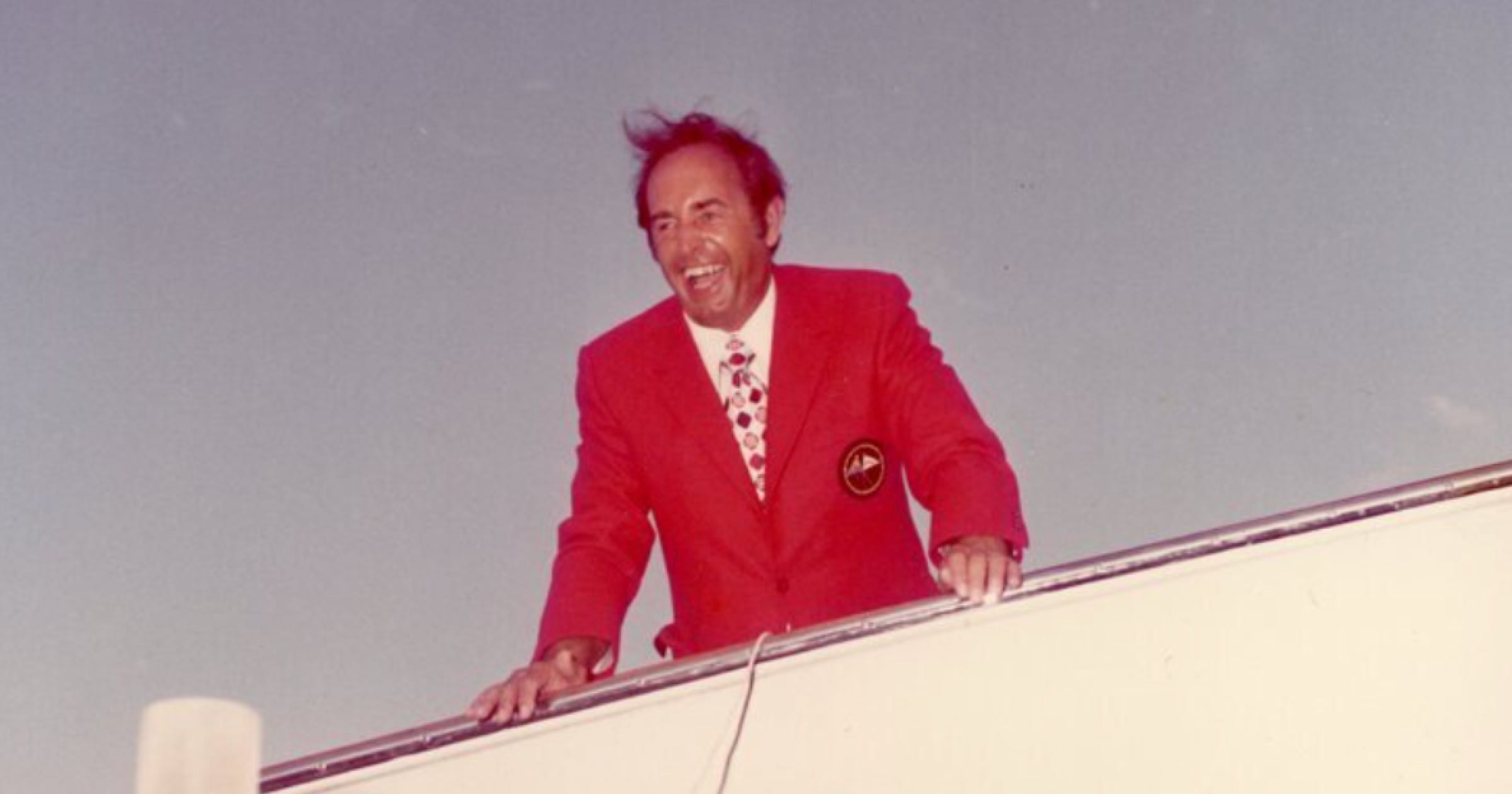
They tell me the American people and our free enterprise system, and this is what you’re going to hear, especially the fact that you’re a Junior Achiever, they say, “Why, this is a rotten society today, folks.” Did you know that? “That dog-eat-dog free enterprise system, why, that’s out of date. This is the age of socialism. This is a new age, where we’re concerned for our fellow man. This dog-eat-dog, trying to outdo the other guy and make a better product and outsell him, that’s not anymore.” That’s what millions are saying in this country, aren’t they?
But you see, what disproves all that is that, despite this so-called selfish attitude we’re supposed to have, last year the American people reached in their pockets and gave $10 billion away to help somebody else. Through the United Community Funds, or whatever else they happen to believe in, to support it and to their churches. And I never heard anybody yet complain, if it really helped somebody else to see a new day, if it helped somebody else make some progress. No, you see, the average American that I know is concerned for the welfare of his fellow Americans, and he works towards that end and he gives to the causes that will help them. So the next time somebody tells you our system is not conscious of the welfare of others, then you remind them that it’s more conscious of it than any other group of people on Earth. I don’t find any Red Cross or United Community Fund campaigns going on behind the Iron Curtain these days. I don’t see them enjoying the things we have. And neither do you.
Don’t tell me our system’s out of date. It was never more in date. When they talked to you about the great things of this land, I couldn’t help but think. The other night when I was in Los Angeles waiting for a flight back to Chicago, I watched people coming in and going. They’re coming in from Hawaii. I like to watch the flights from Hawaii because those are always champagne flights, and the people sort of roll in off the ramp when they come in all off those deals. But you know there wasn’t a policeman around saying, “Hey Mac, where are you going?” “I’m going to Honolulu.” “Well,” he says, “Who says you can go?” He says, “I say, I can go.” That’s all you have to have. “I said I wanted to go,” and so you go. It’s not that way in most parts of the world.
They talk a great deal about when the first jet started to travel, you know what the problem was? They were worried about filling all the seats. And you know the problem is today? They can’t get the airplanes in the air fast enough. All the plane manufacturers are two years behind. A couple of our pilots were talking the other day about executive aircraft, and they were telling me that if we wanted to buy a new jet airplane today, it would take us two years before we could get delivery on the models that we’re seeking. This is the rewards of our system.
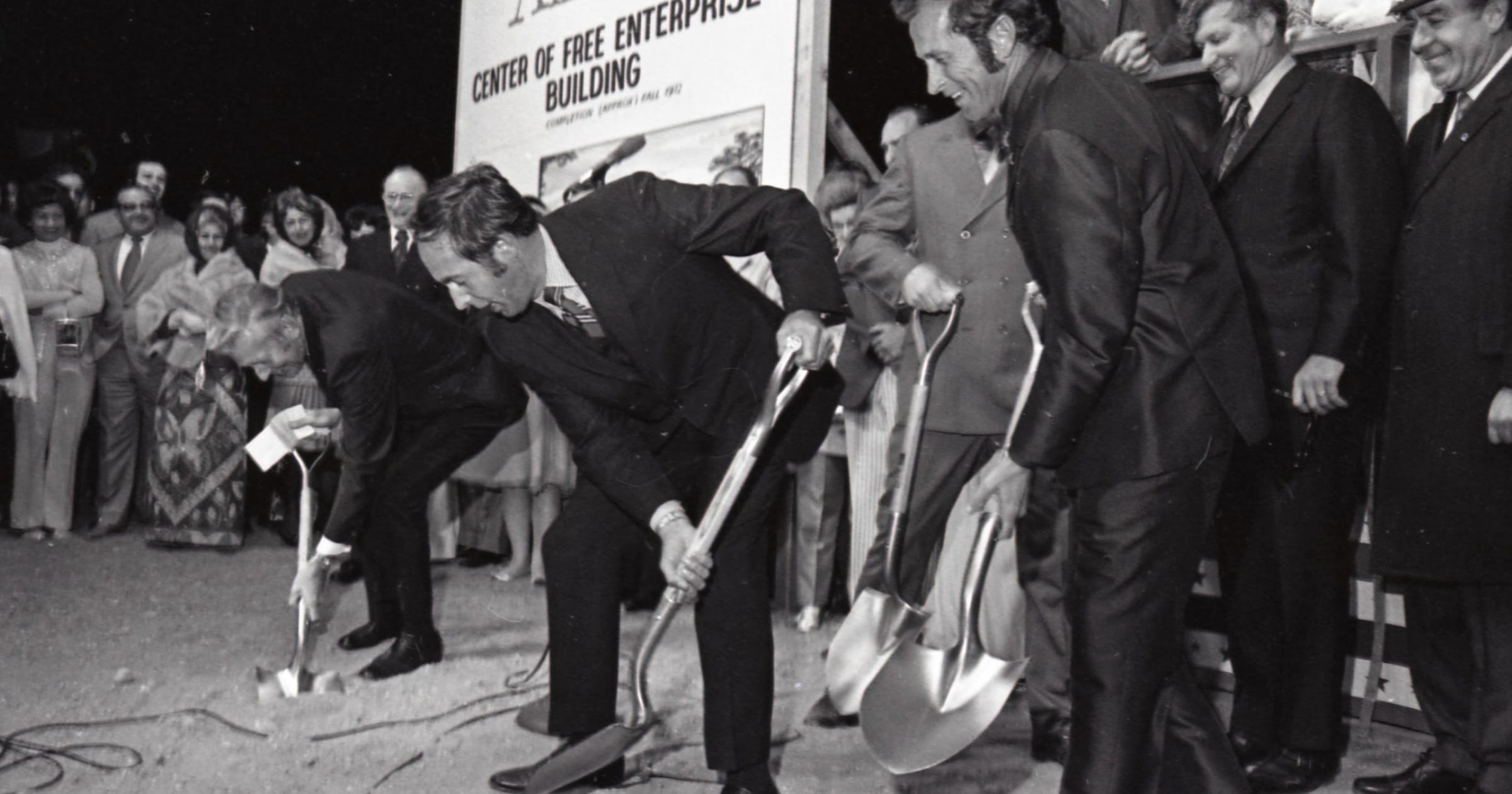
Look at the highways. Look at the factories. People told us, you could never start a business of your own, but we started one in our basement. I don’t want to give a commercial, but you see, there are people who ride by our plant in Ada, Michigan, every day. You know what they say? “You can’t start a business anymore, today. Why, you know the red tape and the government interference and all the problems of labor and management, you just can’t do it.” Well, we did it and we sold free enterprise. It’s in our name, and we built it in because we believed then, and we believe more so now, that the average person in this country would far rather put forth some extra effort to get ahead than to sit home and wait for somebody from the government to hand them a handout. And we’ve proven it.
I thank you, but with all that, I’ve lost my place. I’ll start over, and then we can pick the threads out from there. You see, it’s not what we’ve done. But we believed in people and all they’ve said is, “Give me a chance to get ahead, and I’ll do it.” So, for those people who you will meet and who will be telling you that opportunity doesn’t exist, I want you to stand up and say, “I don’t believe it,” because I happen to know that opportunity is greater today in this country than ever. And believe me, friends, there’s more opportunity in business than any or all of you will ever be able to take advantage of.
The challenges in industry are great. I keep reading about the fact that the kids in college today go into the social fields. They want to work for the welfare of others. Well, if you’ve got any guts, you’ll get in business because we provide more welfare than anybody else. We provide employment for 72 million people, that’s what we do. You see, all these people who are talking about trying to help somebody else are only doing it because they don’t have the guts to face the real challenge, which is taking on somebody else. So they run around playing patty cake. They say, “Well, I’ll hold your hand. I’ll help you.” Help you, nothing. Give him a job. That’s what’ll help him the most.
I like people to go to college, and I’ve got a couple of friends who go. I’m all for it, but I get tired of these boys and their two-bit theories sitting over there always telling me how important it is to help people, and telling these kids, it’s all just the love of somebody else. Well, you better love them or you won’t help them. But I’ll tell you, you can help a lot more people our way than you can their way. You talk about saying a simple thing with an idea. You say, “I’ll tell you what, lady. I’m going to bring the soap to you instead of making you go to the store and get it.” And that’s all we did. And that’s the great thing of our two countries, that it allows people to still apply such technique. And that’s why we have the greatest standard of living the world has ever known.
Let me give you a few comparisons between Russia and the United States, because I hear more and more people tell me that our way is out of date. It’s an interesting thing. If we’re going to enjoy what they have in Soviet Russia, you know what we’re going to have to do? If we’re going to enjoy what they have, the first thing we’re going to have to do is abandon three-fifths of our steel capacity and two-thirds of our petroleum output. Then, we’ll have to get rid of 95% of our electric motor capacity. And then, we’ve got to destroy two of every three of our hydroelectric plants and we’ll get along on a tenth of our present volume of natural gas. Then, we’ll rip up 14 of every 15 miles of our paved highways and two of every three miles of our railroad tracks. Then we’ll sink eight of every nine oceangoing ships that we have and we’ll scrap 19 out of every 20 automobiles and trucks. Now, you know the problem don’t you? You see, what bothers the people in Russia is that they’ve got all the parking places and we’ve got all the automobiles. Now, that’s a real problem there.
Now, the next thing we’re going to do is we’re going to cut our living standard by three-fourths. We’re going to destroy 40 million television sets, nine out of every 10 telephones. Some of you are going to have to learn to write and spell again, and that gets pretty tough, you see? After we got rid of nine out of every 10 telephones, we’re going to get rid of seven out of every 10 houses. Yeah, and some of you would discover that you can’t spend so much time in the bathroom. Now, I tell you, one john down at the end of the hall shared with seven families. You see, we sit and we laugh, and they tell me our system isn’t worth preserving. Isn’t it marvelous, that wall they built around Berlin, to keep all of us out? Did you ever notice that we don’t have any “out-igration” quota in this country? Yeah. Anybody is free to leave, but they don’t want to.
Well, after we get rid of those houses and telephones, then, to keep up with them, we’ll put 60 million people back on the farm, on the farm to try and grow enough food. Most of you wouldn’t be wondering about what you’re going to do when you get out of school. That would have already been predetermined by the government. And most of you would already be back on the farm, and they still can’t raise enough food to feed their own people. And yet I read about these boys, and they’re telling me that that system’s a wonderful one. And somebody says, “Your theories are all wrong.” And all I can say to the boys with the theories is, “Friend, I’m not talking theory.”
I had the privilege of having dinner this evening with Mr. Moseler and Mr. Hardenbrook. And Mr. Moseler was telling me some boys in college challenge him and say, “Mr. Moseler, you’re out of date. What you’re telling me is theory.” Mr. Moseler said, “I’m not telling you a theory, friend. I’m telling you performance figures from a businessman. Those boys who are writing those books over in college, they got the theory. I got the facts, and what I’ve been giving you is facts.”
The United States of America, and I don’t have the figures on Canada or I’d share them, but they apply equally because we’ve checked the map and the performance of the Canadian people is just the same as it is here, but the figures for this country show that the United States has 6% of the world’s population. We occupy 7% of its land surface. However, we own 71% of the world’s automobiles, 56% of its telephones, 50% of the radios, 29% of the railroads and 83% of all the television sets. You might like to know that the people of the United States own 90% of the world’s bathtubs, too. This country produces 59% of the world’s steel, 46% of its electric power, 50% of the oil, 56% of the corn, 42% of the cotton, 33% of the coal, 31% of the copper, 38% of the iron and 44% of all the manufactured goods in the world is made by 6% of the world’s population.
And these boys with their theories are telling you it doesn’t work. Well, young friends, it’s up to those of us who know better to stand up and challenge those... well, I can’t think of a favorable word at the moment. But you see, if we don’t challenge them, they’ll take the day. I was in a barber shop a while back. A fella came in, he obviously worked on a railroad, sat down, and the first thing he did, he started grumbling. He grumbled about the railroad. He grumbled about his working conditions and said, “Why, it’s too bad they make me work overtime. They pay me too much.” And they don’t do this. And they don’t do that. Oh, he went on and on. Oh yeah, they paid him too much because, you see, he didn’t want to work that hard. He couldn’t stand the overtime. He wanted to go home. And so everything was wrong. Finally, he says, “The government ought to take over the railroad.”
And about that time, I was going right through the roof. I says, “Friend, I know a place in the world they do it your way. And there’s nothing keeping you here. In fact, I got enough money in my pocket to buy you a ticket, one way. And you can go, because you don’t have to stay here and do it our way.” But he got kind of mad and he left, and I left. But you see, that wasn’t the clue. What I’m trying to say to you is this, that every time he comes in the barbershop now, he does it differently. See, before this, always when he came in, he grumbled about how rotten our society was and our system was. But now, they tell me when he comes in, he sits down and he looks around. He’s afraid I might be there again.
But the core of this and the problem is that he’d been coming to the barbershop for years, and nobody challenged him. You see, he kept downgrading America every time he came in and he got away with it. And if you say something long enough, pretty soon you begin to believe it. And pretty soon you think everybody believes it. And pretty soon you’ve dug your own grave only because a few of us didn’t stand up and say, “Hey, Mac, it’s not that way. Let me tell you about how great it is in America. Let me tell you how great it is to be a Canadian.” Until we start to do that, we too will contribute to our own demise.
A fellow by the name of Robert Murphy, a former diplomat, former under secretary of state, said this, “Only by fostering private enterprise can the United States truly capitalize on its most basic advantage over communism.” And another fellow from England by the name of Winston Churchill, said this, “Socialism is a philosophy of failure, the creed of ignorance, and the gospel of envy. Its inherent virtue is the equal sharing of misery.”
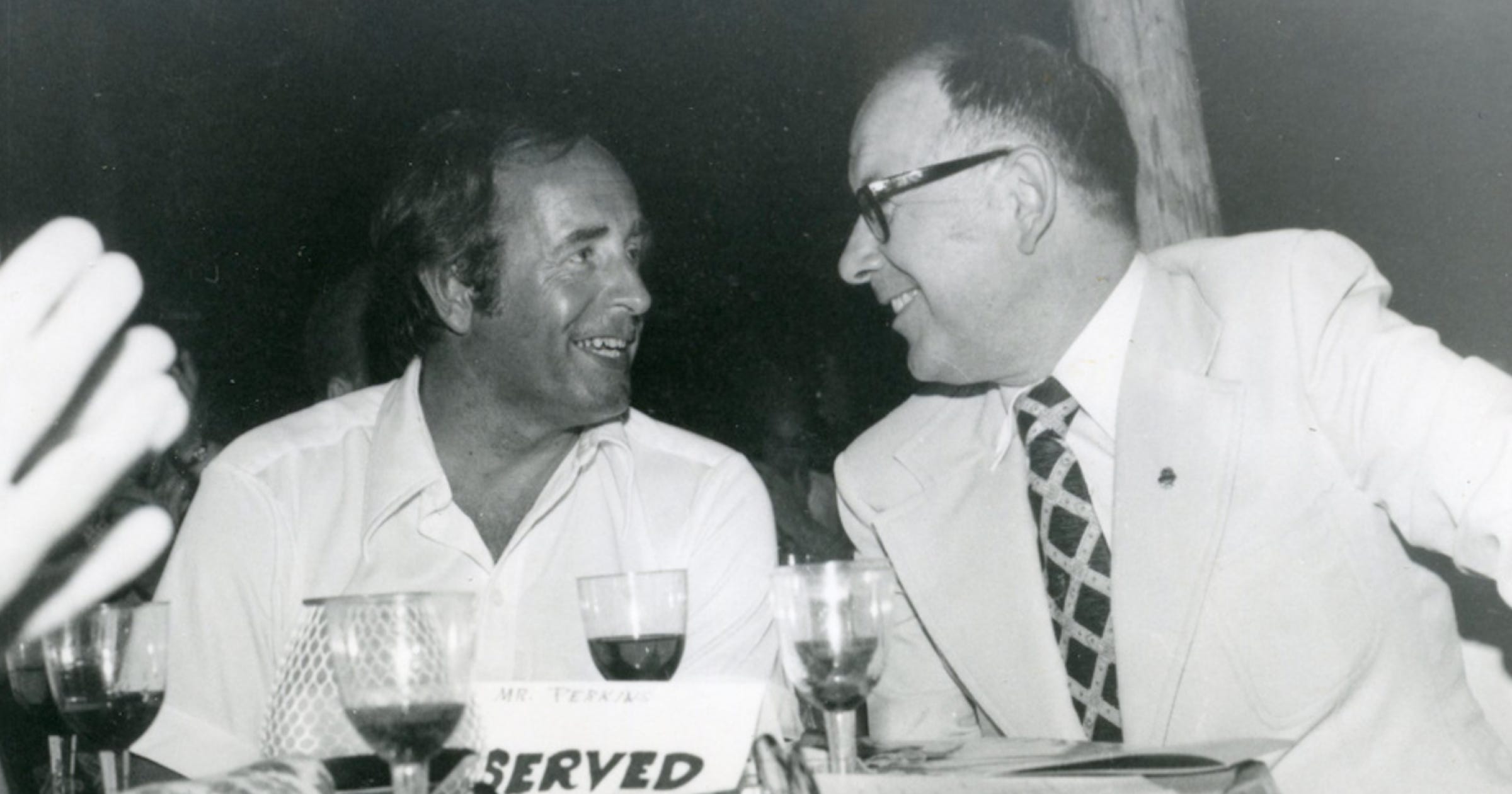
And I would close with these words: To me, the strength of our system doesn’t necessarily lie in the free enterprise system, but it lies in the fact that we have always had mutual respect for each other and we will be no greater than that respect. And at the bottom of that respect lies a faith that most of us believe that we are placed on this earth by God with a responsibility to use the talents we have been given. And certainly, the prayer that we had at the opening of this session said the same, that this is our real responsibility today. When this country was founded and the pilgrims came here, they had a Thanksgiving Day and they gave thanks. And they pioneered and they went forth, and they used their talents. I find today in Washington an effort to get rid of the words “In God We Trust” on our money. And in my opinion, when they get rid of the words, you better get ready to throw the money away, because it won’t be worth anything either.
Just as surely as I stand up for our system, I stand up for my religious beliefs. And too many people are always backing off, because someplace, somebody said, “Well, don’t discuss religion and politics, because all it leads to is an argument.” Well, young people, it’s time we took on the argument and it’s time we debated every issue and it’s time when everybody else started telling us what’s wrong, we stood up and said, “Hey man, let me tell you what’s right.” And you watch the other crowd. They’ll wilt, because they don’t have the performance figures to back them up. They just got theory.
When somebody tells me our system’s out of date, I ask them how many people from the free world were shot climbing into Berlin on the other side. And I ask how many tunnels were dug from this side. And what’s happened is that the rest of the world is in one big prison camp, trying to escape to the freedoms that we enjoy. And you and I better shout about it. And whenever anybody will tell you it taint so, you tell them it tis. We believe, and have always believed, in this country, that man was created in the image of God, and that he was given talents and responsibilities, and was instructed to use them, to make this world a better place in which to live. And you see, this is the really great thing of America. And this is where it contrasts with everything that Russia and other godless societies are attempting to do.

Because you see, at heart, we believe that man was created, and that in him is a living spirit. That he’s not just a bunch of dirt and clay put together for a few years until we bury him, but that he has greater depth and greater responsibilities than that. And that’s why we respect each other. And that’s why we care for each other. And that’s why we must stand together and give thanks for the things we enjoy.
And so I’m asking you to sell America, along with whatever business or profession you go into. I want to remind you of your position of responsibility as a leader, because that you are. You’ve proven it by coming here. But remember to extend that greeting and a friendly hand to all your fellow Americans and your fellow Canadians, because they, too, were created in the image of God. And with your respectability, regardless of where they come from or their color or their economic station, we’ll go together as a united people, building a country that can go on and on and on with the blessings of God.
Let me close with these words, and they are taken from Thomas Wolfe. And he said this, “So, then, to every man his chance, to every man, regardless of his birth, his shining golden opportunity, to every man, the right to live, to work, to be himself, and to become whatever thing his manhood and his vision can combine to make him, this, seeker, is the promise of America.”

