


As America approaches its 250th anniversary, many are asking whether renewal is still possible. In Grand Rapids, that question once became intensely real when concerns over crime and public safety threatened to prevent the city from even hosting a presidential parade. In 1976, the city faced decline, division, and doubt, but local leaders and everyday citizens chose action over resignation. Their response helped spark a revival that reshaped Grand Rapids for generations.
In this Wall Street Journal op-ed, Believe! Editor in Chief Doug DeVos reflects on that defining chapter in his hometown’s history, arguing that the same spirit rooted in responsibility, creativity, and shared purpose is exactly what cities like Grand Rapids—and America—need as the nation approaches this milestone.
Originally published in The Wall Street Journal on December 19, 2025, Doug DeVos’s op-ed is reprinted below.
—The Believe! Editorial Team
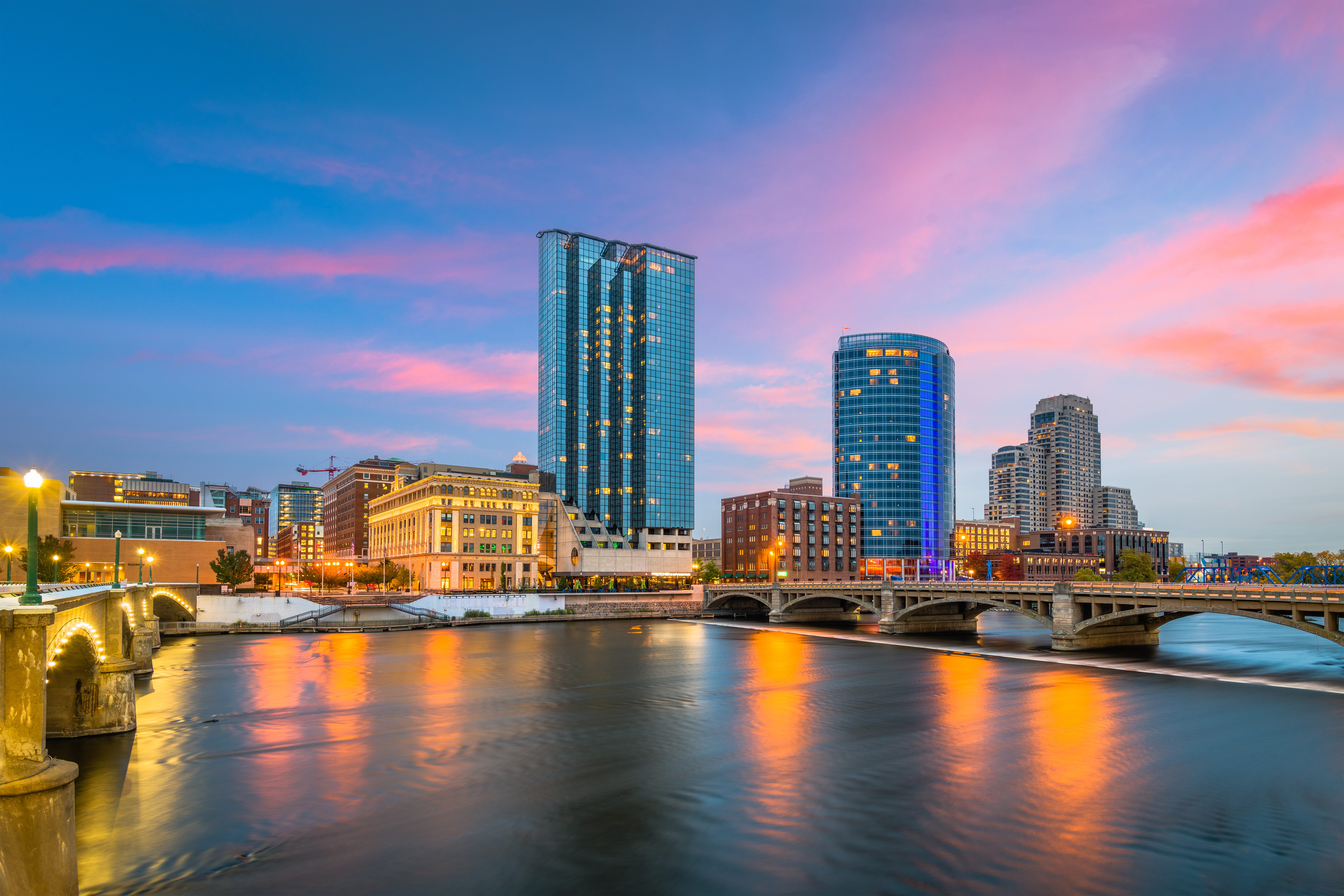
As the U.S. approaches the 250th anniversary of its founding, the country feels like it’s coming apart. To find a path forward, look to the revival of my hometown during the 200th anniversary year, when I was 11.
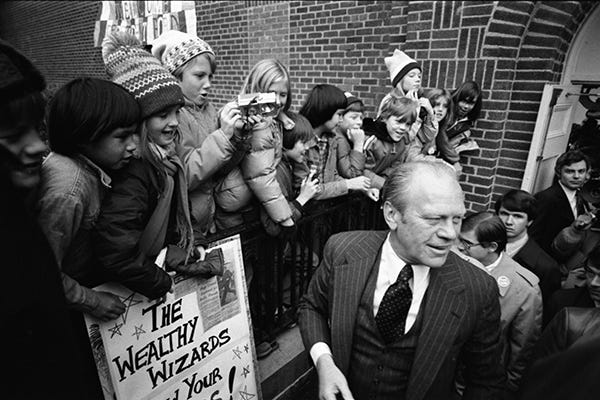
On the eve of the 1976 election, President Gerald Ford wanted to hold a motorcade parade in Grand Rapids, the city where he grew up. But the Secret Service took one look at downtown, which was filled with boarded-up buildings, and balked. According to Ford’s biographer Richard Norton Smith, they feared their protective resources might be stretched dangerously thin in such a downtrodden place—a concern no doubt magnified by two earlier assassination attempts against the president. It looked like the city couldn’t honor its favorite son.
That was a wake-up call to the people of Grand Rapids. The city had struggled with crime and poverty over the previous decade, like so many other cities back then. But people couldn’t stand the idea of letting it stop the parade. Retired law enforcement officers and off-duty sheriff deputies came out of the woodwork to provide additional security for the parade. It went off without a hitch. Following this success, local business and civic leaders, including my father Rich DeVos, committed to reviving Grand Rapids.
A movement was born. As a young adult, I watched civic and business leaders clean up downtown, fix old buildings and build new ones. Employees at Amway showed up for service projects in struggling neighborhoods. Members of the church I grew up in built parks, founded businesses and extended a helping hand to those in need. It wasn’t only the wealthy and well-connected; it was everyday people from across the city taking everyday action. A half-century later, Grand Rapids is a city transformed, regularly ranked among the best places in the U.S. to live, work and raise a family.
America on the eve of 2026 feels an awful lot like Grand Rapids in 1976. There’s a palpable sense that the country is struggling, if not starting to fail. It isn’t only the sorry state of big cities. It’s the state of the nation’s schools as kids fall behind in basic math and reading. It’s the state of the body politic as division and violence spread fast. It’s the sorry feeling that we’re a nation without a rudder, drifting toward inevitable decline. According to Pew Research, about half of Americans say the U.S. can’t solve many of its important problems.
Yet the American people are the only ones who can put the country back on track. Washington can’t force change. Change starts internally, with each of us accepting that the only way things will get better is if we tackle challenges in our own backyards. People must refuse to accept stagnation or decline and relentlessly move forward, not only in business, but in every facet of life.
That’s what the people of Grand Rapids did 50 years ago. The task of renewal falls to each generation. Even Grand Rapids is at risk of backsliding, and some parts of the city are struggling with too little opportunity and too few strong families.
We have to think creatively about how to address problems and experiment to find new solutions.
Isn’t that what America needs, too? Individual action guided by innovative thinking and a belief that we alone can do what must be done?
In the immediate term, we need the equivalent of those retired cops and off-duty sheriffs from 1976—principled leaders who step up as a stopgap for the most urgent challenges. In the medium term, we need an explosion of everyday innovators in businesses, nonprofits, education, elected office and beyond. It won’t be easy and it won’t be fast, but the nation’s challenges can be overcome, so long as more people join the work of solving the problems closest to them. That’s how we move toward a “more perfect union.”
When I look back on Grand Rapids transformation, I’m most inspired by how people rallied around a shared vision of the city. My hometown, like America, has never been a place where everyone agrees. But it’s harder to stoke division when you’re working together to tutor struggling students or fund inner-city entrepreneurs. When the challenges are right in front of you, getting results is far more gratifying than scoring points. And while it’s tempting to think your actions don’t matter, millions of people taking small steps is the most effective way to move the country forward.
This is how Americans always get through tough times. If we are willing to step up again, the 250th anniversary will be the beginning of a great national comeback.
So true! Great article! When we Believe in our community, amazing things happen! Thank you Doug!
Well said, I Believe we all have WAY more in common than not.