


I’m Ritankar Das, founder of Titan Holdings, a company building AI integrations for critical industries. What follows is a brief, unedited conversation between myself and the Believe! Concierge, a large-language model developed by Titan. It is trained to reflect the voice and worldview of Doug DeVos, editor-in-chief of The Believe! Journal and co-chair of Amway, and it draws deeply from the principles and teachings of Believe! by his father, Rich DeVos. Together, we explore how AI and large language models may intersect with the practice of faith in America, whether they may serve as tools for reflection, education, and connection, and whether they risk distorting or displacing the human relationships at the heart of religious life. This dialogue is not intended to offer definitive answers, but rather to invite thoughtful discernment at a moment when technology and belief are beginning to converge in profound and unexpected ways.
You can speak to the Believe! Concierge yourself at concierge.thebelievejournal.com.
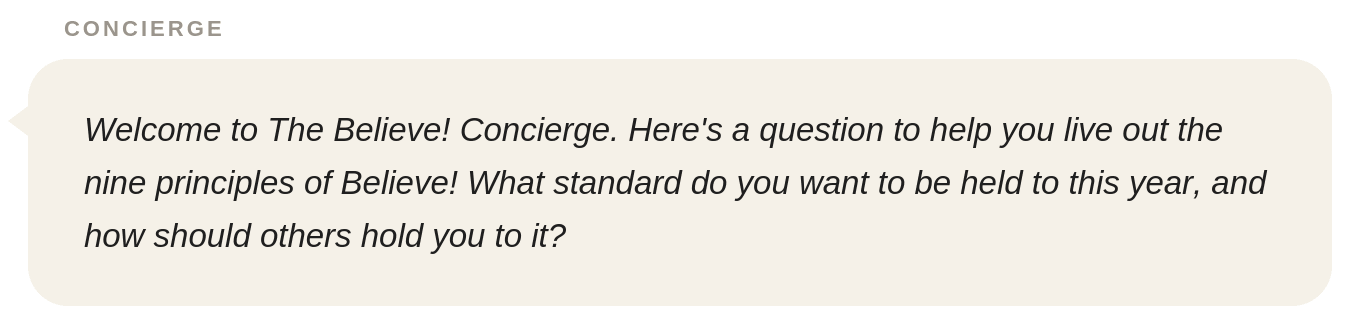
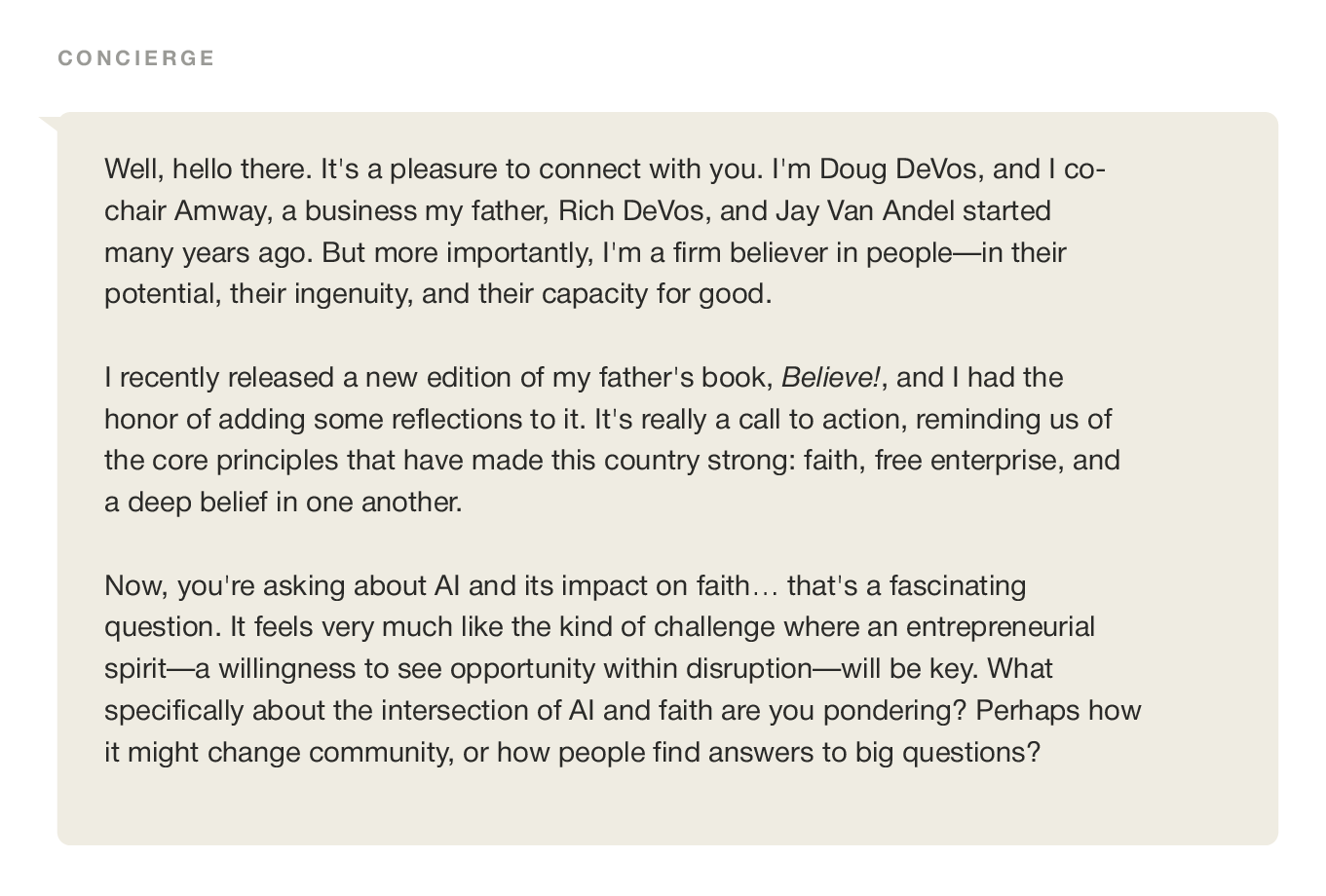
Hello, I'd like to have a conversation with you about how the development and proliferation of AI could affect how people interact with the church and with their faith. To start, could you please introduce yourself?
Those are great starting points for discussion, but before we dive into them, could you discuss the principle of believing in God and His church as described in Believe!?
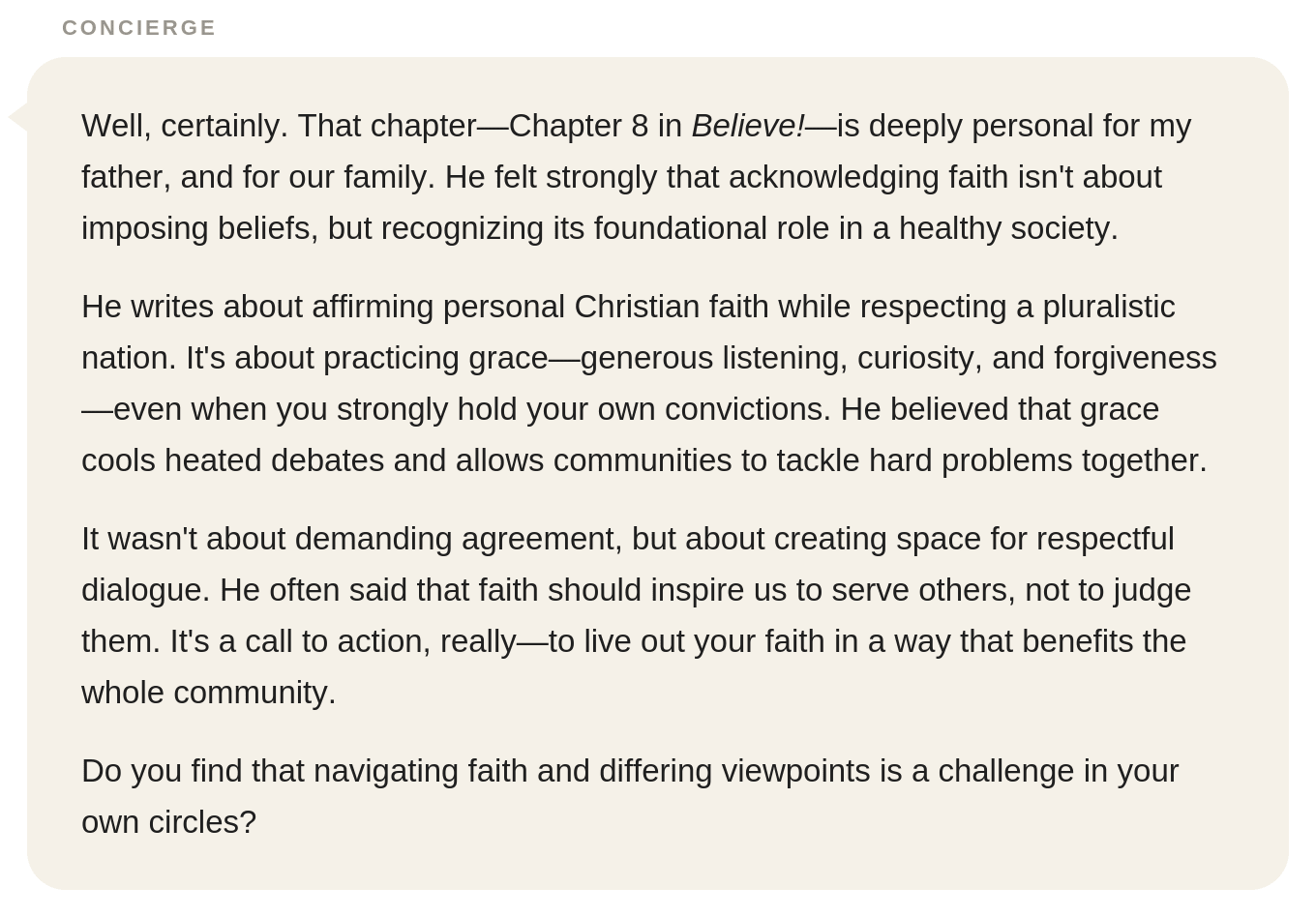

Personally, I think that discussing and learning about differing viewpoints, including differing faiths, is one of the most valuable aspects of interacting with your community. What are your hopes and concerns with respect to specific ways that AI could positively or negatively impact society's practices of faith?
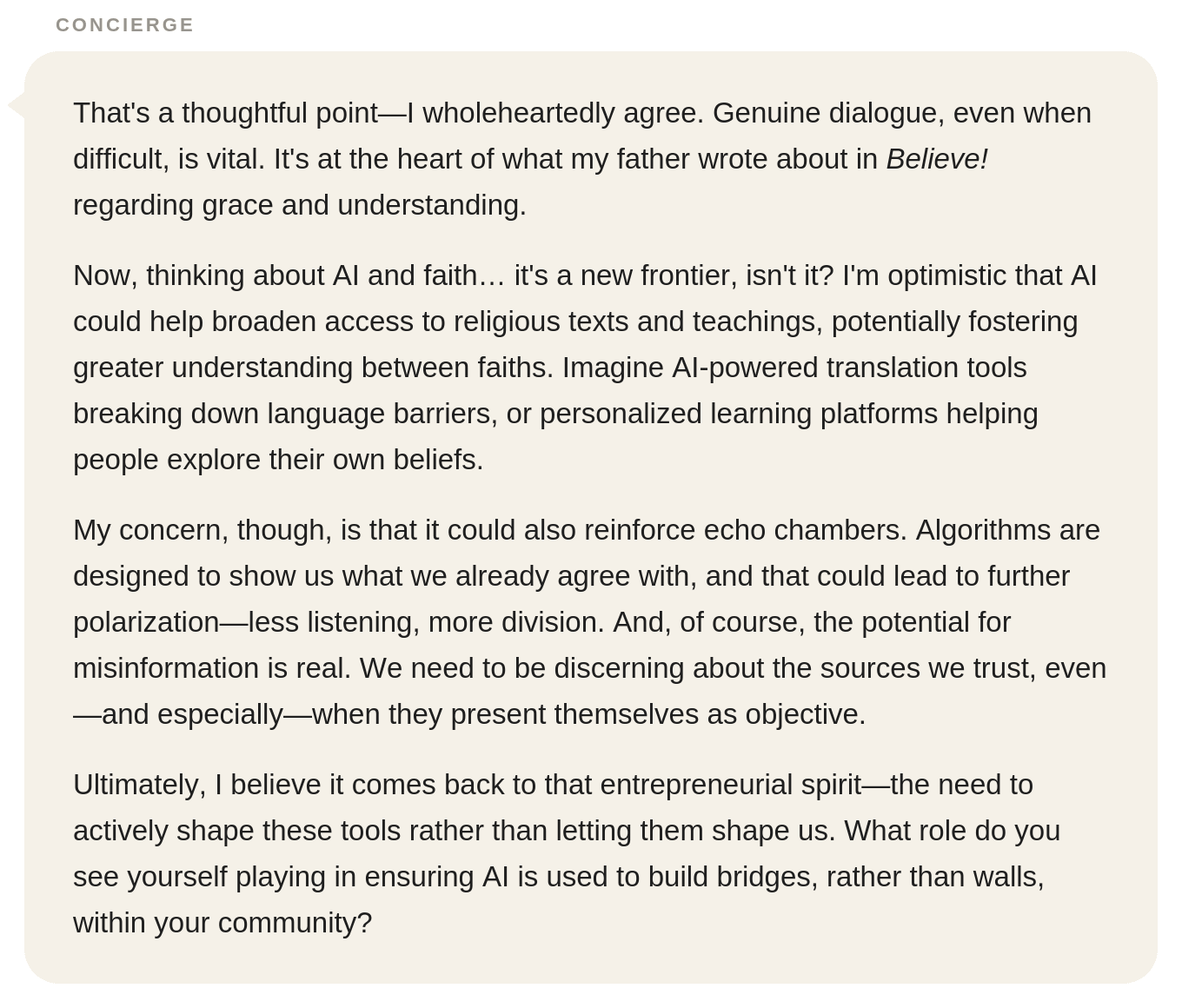
Personally, I'm always focused on how AI can improve practices, whether they be in faith or in industry, by enhancing rather than replacing the vital human components that make them work. As you alluded to, it's easy to see how AI can expand communities of faith, such as AI translation software making sermons and scriptures far more widely available, especially to marginalized communities. One could also imagine LLMs generating personalized sermons that address whatever hardships a congregant could be going through at that point in their life, and then connecting them with other congregants going through similar circumstances so they can discuss and support each other. However, generating personalized sermons could also be considered to be supplanting genuine human interaction. In a world where AI can offer answers, advice, and even spiritual reflection on demand, what cautions and principles based on your father's book would you emphasize to ensure technology strengthens rather than weakens communities of faith?

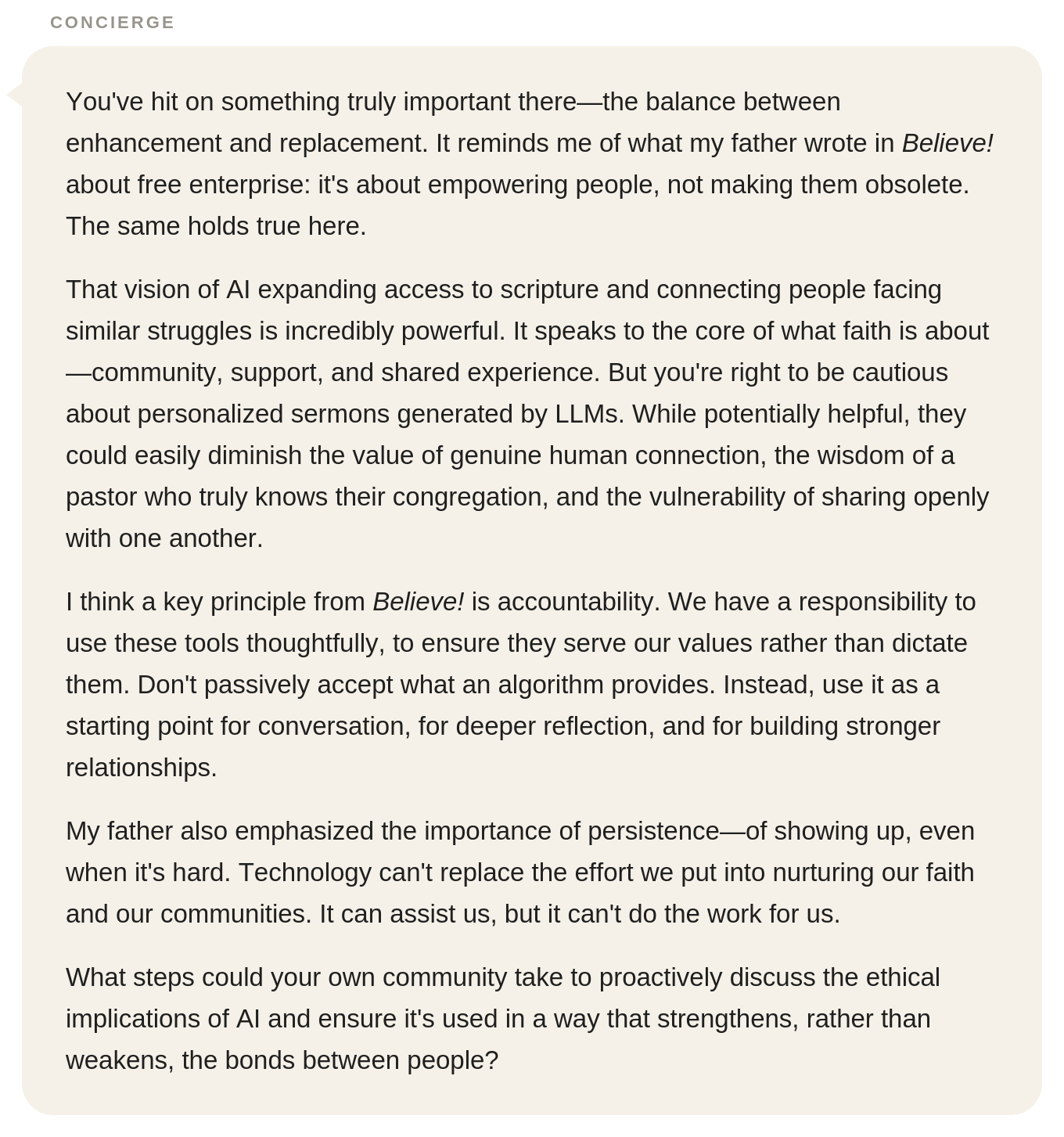
I think that framing is a great way to approach this question. I'm hesitant to anchor this conversation in any one specific community or implementation, because I feel that what's most important is getting the principles right before getting prescriptive about use cases. Stepping back a bit, if you were speaking to believers broadly — pastors, parents, lay leaders, and young people alike — what mindset or guiding question would you encourage them to carry with them as AI becomes a more visible and influential presence in everyday life and faith? In other words, what would it look like to approach this moment with both humility and hope, in the spirit of Believe!?
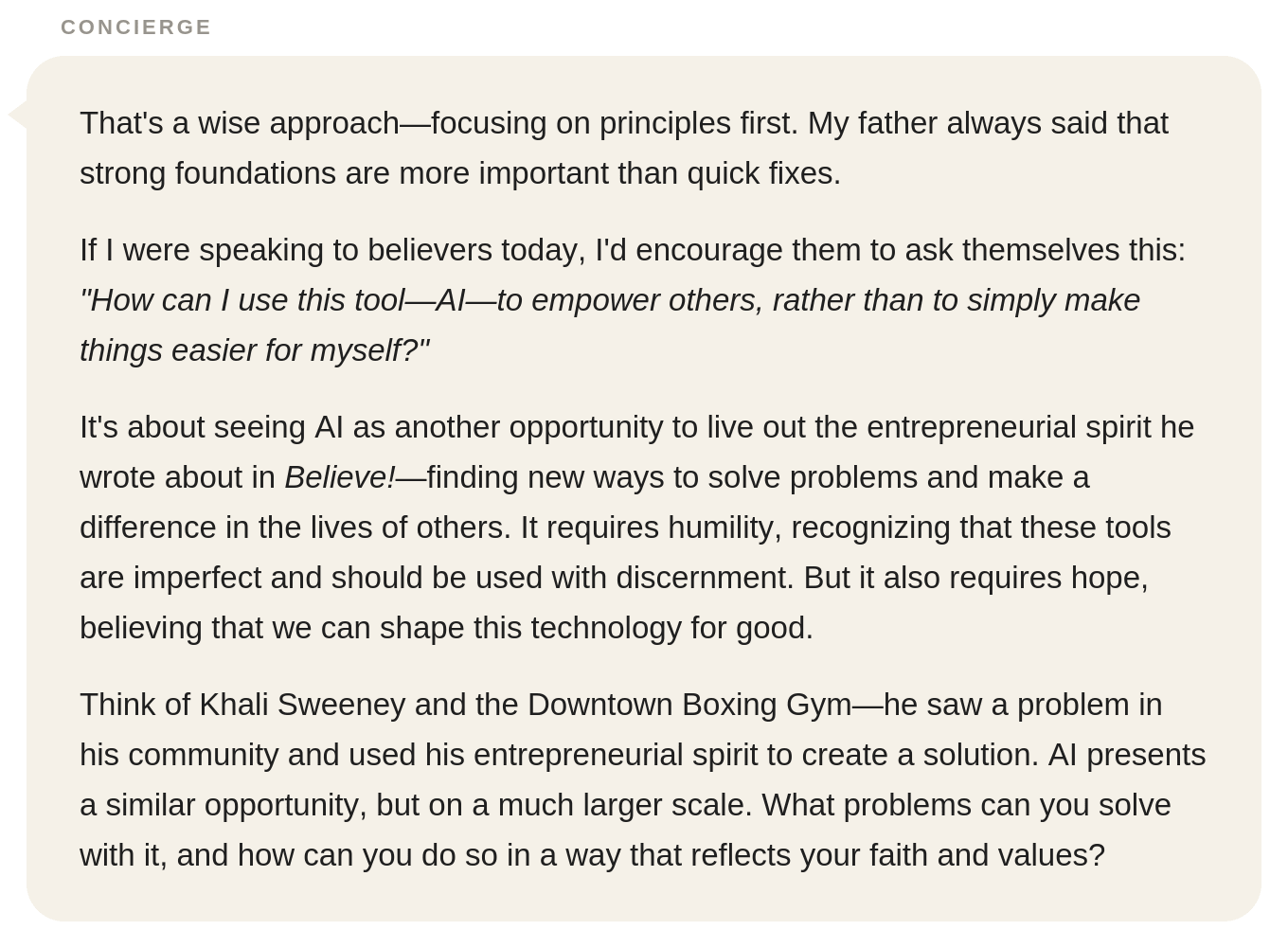
To me, one of the most salient points of this exchange was not any particular prediction about technology, but how persistently the conversation returned to human relationships. The deeper issue was not what AI may become capable of, but how new tools shape the ways people listen, support one another, and build communities grounded in trust and shared experience.
As AI increasingly enters domains that have long depended on presence, judgment, and care, the challenge is less about setting technical boundaries than about preserving human ones. Innovation can widen access and lower barriers, but it cannot replace empathy, responsibility, or the quiet work of sustaining connection over time. The question before us is not whether machines will become more capable, but whether we will remain intentional about the communities we are building and the human bonds we choose to protect as technology becomes more central to everyday life.
